


 English
 Español
News
Home / News / Industry News / How do Anti-Corrosive Solenoid Valves prevent rust and chemical damage?

News
Content
Anti-corrosive solenoid valves are designed for environments where moisture, aggressive chemicals, or fluctuating temperatures can quickly degrade standard valve components. Corrosion is not limited to visible rust; it includes pitting, chemical attack, scaling, and material embrittlement that compromise sealing performance and magnetic response. In industrial fluid control systems, even minor corrosion can lead to leakage, slow response times, or complete valve failure. Understanding the specific corrosion risks present in an application is the first step in selecting or designing an effective anti-corrosive solenoid valve.
Common high-risk environments include chemical processing lines, water treatment facilities, food and beverage plants, marine installations, and outdoor equipment exposed to humidity or salt spray. In these settings, valves may encounter acids, alkalis, chlorides, solvents, or oxidizing agents. Anti-corrosive solenoid valves address these risks through a combination of material selection, surface treatment, structural design, and sealing strategies rather than relying on a single protective measure.
One of the most direct ways anti-corrosive solenoid valves prevent rust and chemical damage is through the use of corrosion-resistant body materials. The valve body is continuously exposed to the working medium and surrounding environment, making material choice critical. Metals and polymers are selected based on their chemical stability, mechanical strength, and long-term compatibility with the fluid being controlled.
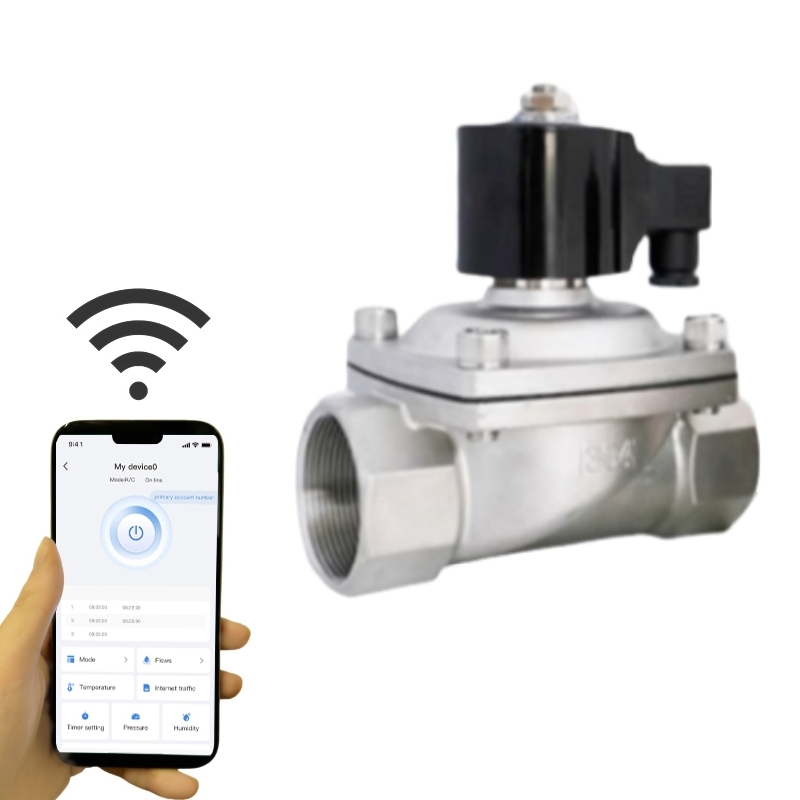
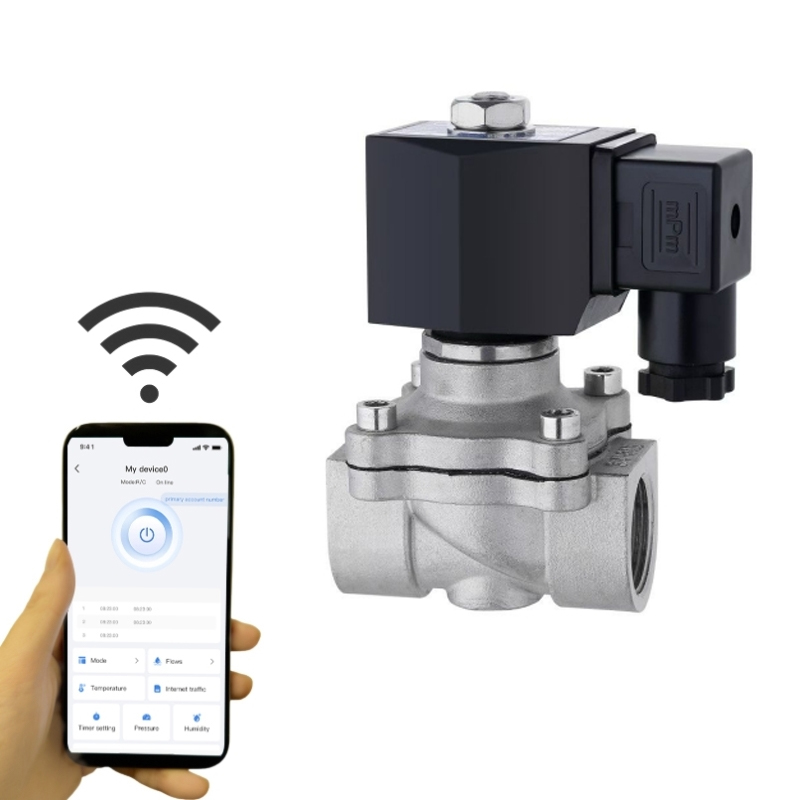
Stainless steel, particularly grades such as 304 and 316, is widely used due to its chromium-rich oxide layer, which naturally resists oxidation and many chemical agents. For highly aggressive media, alloys with molybdenum content offer improved resistance to pitting and crevice corrosion. In applications where metal corrosion is unavoidable or weight reduction is important, engineering plastics such as PTFE, PVDF, or reinforced nylon are used to eliminate rust entirely.
Beyond base materials, anti-corrosive solenoid valves often rely on surface treatments and coatings to extend service life. These treatments form a physical or chemical barrier between the metal substrate and corrosive agents. Unlike untreated surfaces, coated components are less likely to develop micro-cracks or localized corrosion points that grow over time.
Common treatments include electroless nickel plating, epoxy coatings, and anodizing for aluminum components. These finishes improve resistance to moisture ingress, chemical splash, and airborne contaminants. Importantly, high-quality coatings are applied with controlled thickness and adhesion to avoid flaking, which could otherwise contaminate the fluid system or reduce valve reliability.
A well-applied protective coating reduces the frequency of inspection, cleaning, and replacement. In corrosive environments, unprotected valves may require frequent downtime for maintenance. Anti-corrosive coatings slow down material degradation, allowing facilities to operate longer between service intervals and lowering overall operating costs without compromising performance.
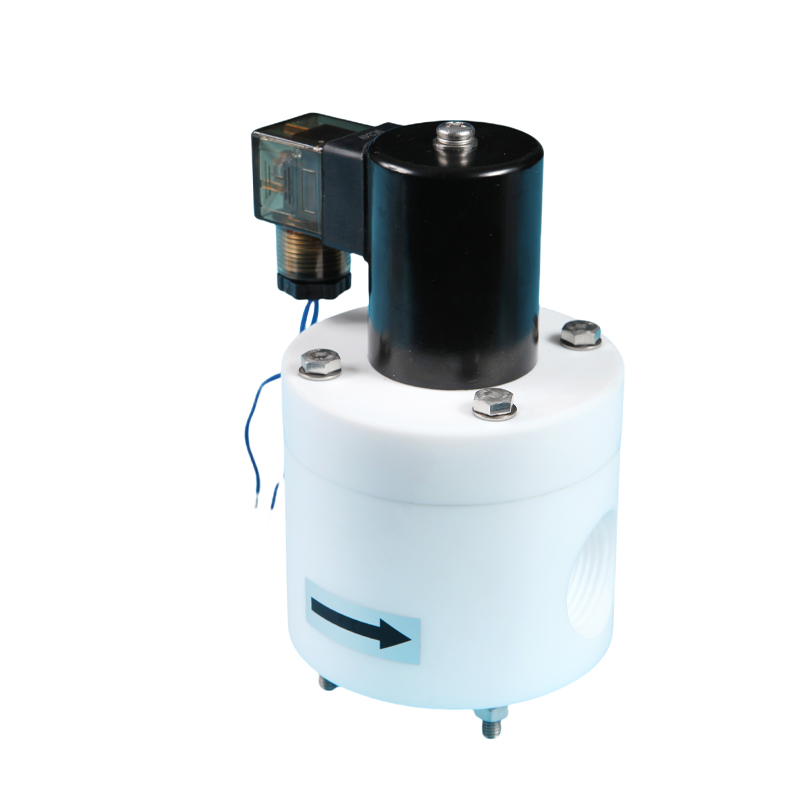
Seals are often the most vulnerable components in a solenoid valve when exposed to chemicals. Anti-corrosive solenoid valves use sealing materials that maintain elasticity and chemical stability even after prolonged exposure to aggressive media. Effective seals prevent fluids and vapors from reaching internal metal parts, protecting both the valve body and the solenoid assembly.
Elastomers such as EPDM, FKM (Viton), and PTFE are selected based on temperature range and chemical compatibility. For example, EPDM performs well with water, steam, and mild chemicals, while FKM resists oils, fuels, and many solvents. PTFE seals offer near-universal chemical resistance, making them suitable for highly corrosive applications.
| Seal Material | Typical Media | Corrosion Protection Role |
| EPDM | Water, steam, mild chemicals | Prevents moisture-related corrosion |
| FKM | Oils, fuels, solvents | Blocks chemical attack on metal parts |
| PTFE | Strong acids and alkalis | Provides inert chemical barrier |
The solenoid coil is essential for valve actuation but is highly sensitive to corrosion and moisture. Anti-corrosive solenoid valves are designed to isolate the coil from direct contact with fluids and corrosive atmospheres. This isolation is achieved through encapsulation, sealed housings, and corrosion-resistant fasteners.
Encapsulated coils are typically molded in epoxy or resin, creating a moisture-proof barrier that protects internal windings from oxidation. In outdoor or washdown environments, sealed enclosures with appropriate ingress protection ratings prevent water, dust, and chemical vapors from reaching electrical components. This design approach ensures consistent magnetic force and reliable valve operation over time.
Corrosion often begins in stagnant zones, sharp corners, or crevices where fluid accumulates. Anti-corrosive solenoid valves incorporate smooth internal flow paths to reduce these risk areas. By minimizing dead zones and promoting uniform flow, the valve reduces the likelihood of localized chemical concentration and deposit formation.
Precision machining and thoughtful geometry ensure that corrosive media does not remain in contact with internal surfaces longer than necessary. This design consideration is especially important in applications involving corrosive liquids that may crystallize or react when stagnant, accelerating material degradation.
Preventing rust and chemical damage is not solely a matter of using premium materials; it also depends on matching the valve to the specific application. Anti-corrosive solenoid valves are typically validated through compatibility testing, including exposure to target chemicals, pressure cycling, and temperature variation. These tests help confirm that materials and coatings perform as expected under real operating conditions.
From a practical standpoint, users should evaluate fluid composition, operating temperature, pressure range, and environmental exposure before selecting a valve. Consulting compatibility charts and material data reduces the risk of unexpected corrosion and extends the valve’s operational lifespan.
By preventing rust and chemical damage, anti-corrosive solenoid valves contribute directly to system reliability. Reduced corrosion means fewer leaks, stable response times, and predictable shutoff behavior. In automated systems, this reliability translates into improved process control and reduced risk of unplanned downtime.
Rather than focusing on extreme performance claims, effective anti-corrosive design emphasizes durability and consistency. Valves that resist environmental and chemical stress maintain their functional characteristics over long service periods, supporting safe and efficient operation across a wide range of industrial and commercial applications.
Anti-corrosive solenoid valves prevent rust and chemical damage through a combination of resistant materials, protective coatings, robust sealing, and thoughtful structural design. Each element plays a specific role in limiting exposure to corrosive agents and slowing degradation. When selected and applied correctly, these valves offer a practical, long-term solution for fluid control in challenging environments.
For users, the most effective approach is to define operating conditions clearly and prioritize material compatibility over short-term cost savings. Doing so helps ensure that anti-corrosive solenoid valves deliver stable performance, reduced maintenance demands, and dependable service life in real-world conditions.



Copyright © 2025 Alahot (zhejiang) Technology Co., Ltd.
All Rights Reserved.
OEM/ODM Electric Solenoid Valves Manufacture
