


 English
 Español

News
Home / News / Solenoid Valve Solutions / High Temperature Solenoid Valves: Selection, Limits and Real-World Failures
News
Content
A brass solenoid valve on a 175 °C steam line usually shows its first symptom within weeks: the coil smells faintly of burnt varnish, the seat stops sealing on the first cycle after a cold start, and the plunger begins to stick. Nothing is defective. An 80 °C valve is simply being asked to do a 175 °C job.
What separates a real high temperature solenoid valve from a standard valve with a new label comes down to three things: coil insulation class, seal compound, and the running clearance between plunger and guide tube. The rest of this guide works through those three, then covers sizing, installation, and the failure patterns that tell you which limit you hit. The focus is steam, hot water, heat transfer oil and hot gas service up to roughly 250 °C.
High temperature solenoid valves are built for continuous media temperatures above 120 °C; most catalogs stop at 180 °C for standard high-temperature models and reach roughly 250 °C with a 304 stainless steel body and PTFE sealing.
The rating on a datasheet is usually a peak, not a continuous figure. A valve sold as a 180 °C unit often means the seal survives an occasional excursion to 180 °C while steady operation stays nearer 150 °C. Two temperatures decide the real limit: the media temperature at the seat, and the ambient air around the coil.
| Duty class | Media temperature | Body | Seal | Coil class |
| Standard | up to 80 °C | Brass, nylon | NBR | F, 155 °C |
| Extended | 80 to 120 °C | Brass | HNBR, EPDM | F or H |
| High temperature | 120 to 180 °C | Brass or 304 SS | FKM | H, 180 °C |
| Severe | 180 to 250 °C | 304 SS | PTFE | H with thermal spacer |
Seal chemistry is the hardest ceiling in the whole assembly. The bars below show continuous working limits that manufacturers generally agree on:
Most failures at elevated temperature are mechanical and chemical before they are electrical. Four mechanisms account for the majority of field returns.
Working definition: a high temperature solenoid valve is one in which the coil insulation class, the sealing compound and the plunger-to-tube clearance are all specified for continuous media temperatures above 120 °C, so that the magnetic circuit and the sealing surfaces stay stable through repeated heating and cooling.
Stainless steel is the safer body choice above 150 °C, but brass remains serviceable in the 120 to 150 °C band when the media is non-corrosive and cycling is moderate.
Good heat transfer, low cost, easy threading and fine to about 150 °C in water and steam. Avoid it with aggressive condensate, ammonia or any medium that attacks copper alloys.
Higher creep strength and stable above 180 °C, suited to steam, hot oil and mildly corrosive media. Heavier, more expensive, and threaded joints need the right sealant.
The seat compound usually sets the real ceiling, not the body:
Two body options cover most of this range and are worth comparing before you commit to a thread standard:
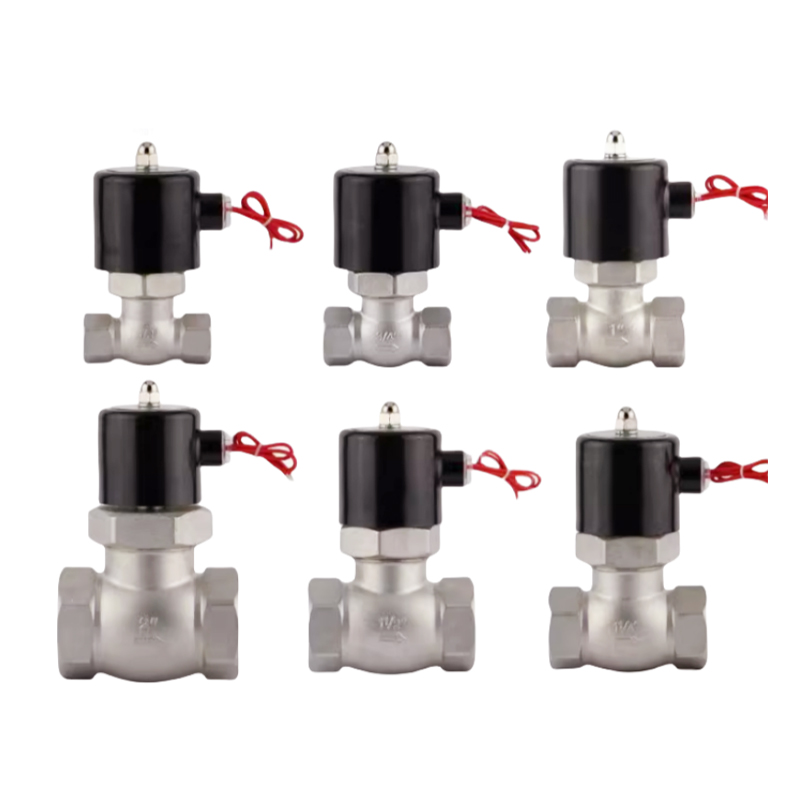 304 Stainless Steel 2L Series High Temperature Solenoid ValveCompare this corrosion-resistant 304 stainless steel 2L valve body option for superheated steam and thermal oil systems before choosing a thread standard.View Product →
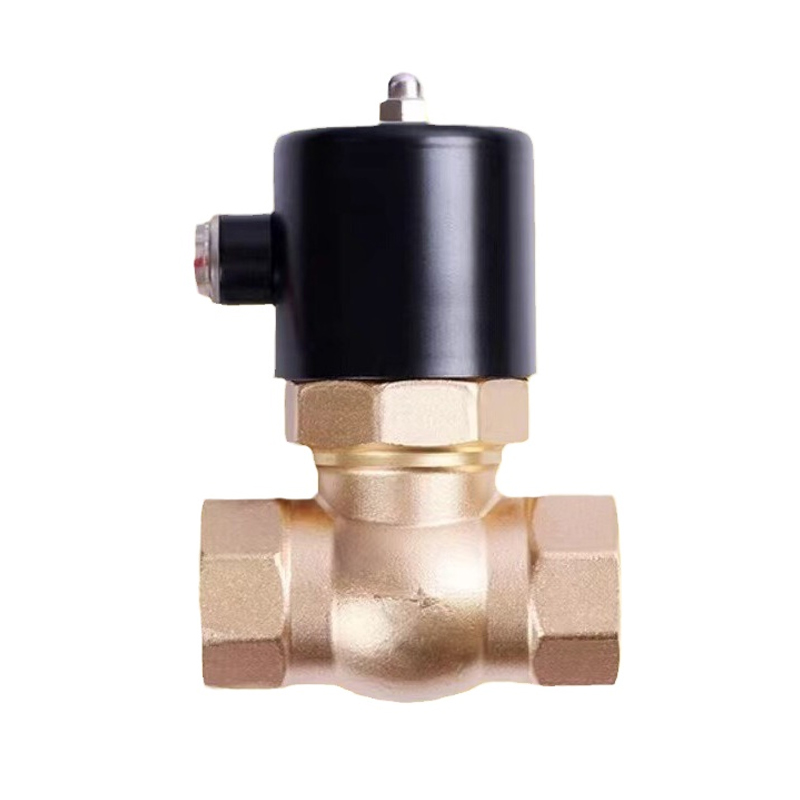 Brass 2L Series High Temperature Solenoid ValveCompare this brass 2L valve body option for thermal oil, steam, and petrochemical lines, with 0.5W latching/pulse operation and low coil heating.View Product →
Six values decide whether a high temperature valve survives in your line; get any one of them wrong and no amount of material upgrading will rescue the installation.
The way a high temperature valve fails usually points at the cause faster than any meter.
For a step-by-step sequence covering coil resistance tests, plunger inspection and seat checks in the right order, see our guide to diagnosing and troubleshooting solenoid valve malfunctions.
Many high temperature valves that fail early were installed correctly for a standard valve and incorrectly for a hot one.
Above 80 °C the standard NBR seat is already outside its comfortable range, and above 120 °C the coil and the plunger clearance need attention as well. That 120 °C line is roughly where manufacturers stop calling a valve standard.
No. The coil is only one of three limits. A Class H coil on an NBR seat still leaks at 150 °C, and the plunger clearance still closes up. Unless the seal and the clearance change with the coil, the upgrade buys only a few extra weeks.
Direct-acting designs tolerate low differential pressure and suit small flows and steam lines that start at zero pressure. Pilot-operated valves move more flow with less coil power but need a minimum differential, typically 0.5 to 1 bar, to open reliably.
In continuous steam service at 150 to 180 °C, a correctly specified valve with FKM or PTFE seals and a Class H coil commonly runs one to three years before seal replacement, depending on cycle count and water quality. Lowering the air temperature around the coil often extends that more than any other single change.



Copyright © 2025 Alahot (zhejiang) Technology Co., Ltd.
All Rights Reserved.
OEM/ODM Electric Solenoid Valves Manufacture
