


 English
 Español
News
Home / News / Solenoid Valve Solutions / Zero Leakage, Maximum Control: What Makes High Pressure Solenoid Valves Indispensable
News
Content
A pipeline carrying hydraulic fracturing fluid at 160 MPa. A hydrogen refueling station cycling at 500 bar. A deep-sea oil extraction manifold where a failed seal means catastrophic loss. These environments share one requirement: zero tolerance for leakage. Standard solenoid valves simply aren't built for this. High pressure solenoid valves are.
The difference isn't cosmetic. It's structural, material, and mechanical — engineered from the sealing surface outward to hold extreme pressure while responding to an electrical signal in milliseconds.
Two design philosophies dominate high pressure solenoid valves: direct-acting poppet and pilot-operated. Understanding which is appropriate isn't optional — it determines whether your system holds or fails.
Poppet valves seal axially. The seating force increases with upstream pressure, meaning higher pressure actually improves sealing integrity. Poppet designs routinely handle 5,000–6,000 PSI with leak rates measured in drops per minute or less — making them the default choice for load-holding and isolation applications where spool valves would allow 20–100 cc/min of bypass leakage even when nominally "closed."
Pilot-operated designs are selected when flow rates matter more than compactness. They use system pressure itself to assist actuation, enabling large orifices and high flow capacity without proportionally larger solenoids. The trade-off: a minimum differential pressure is required to operate, typically 50–100 PSIG. For our pilot-operated solenoid valve range, this is clearly specified per model to prevent misapplication.
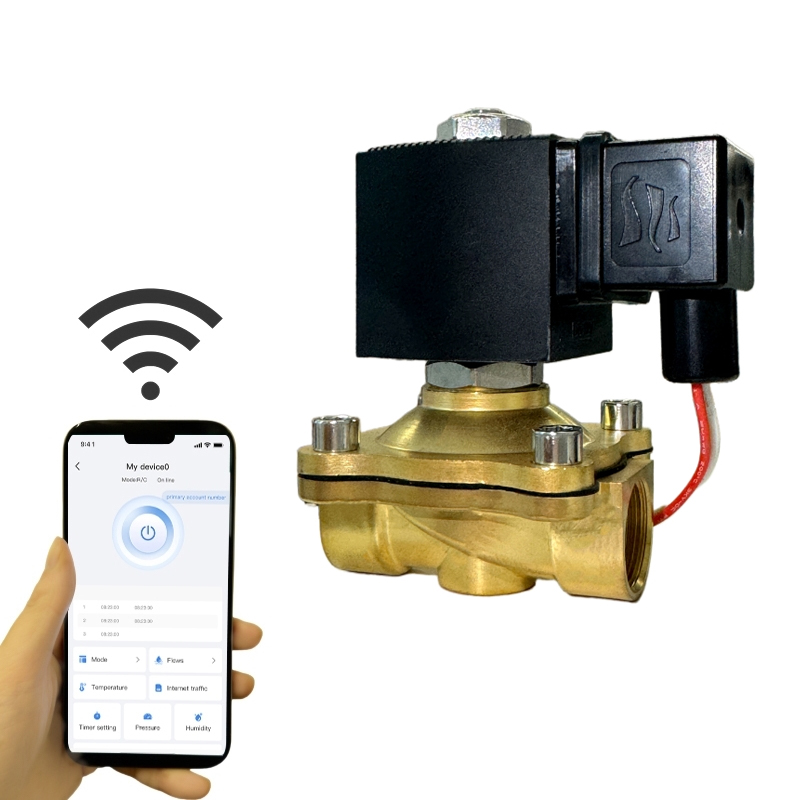
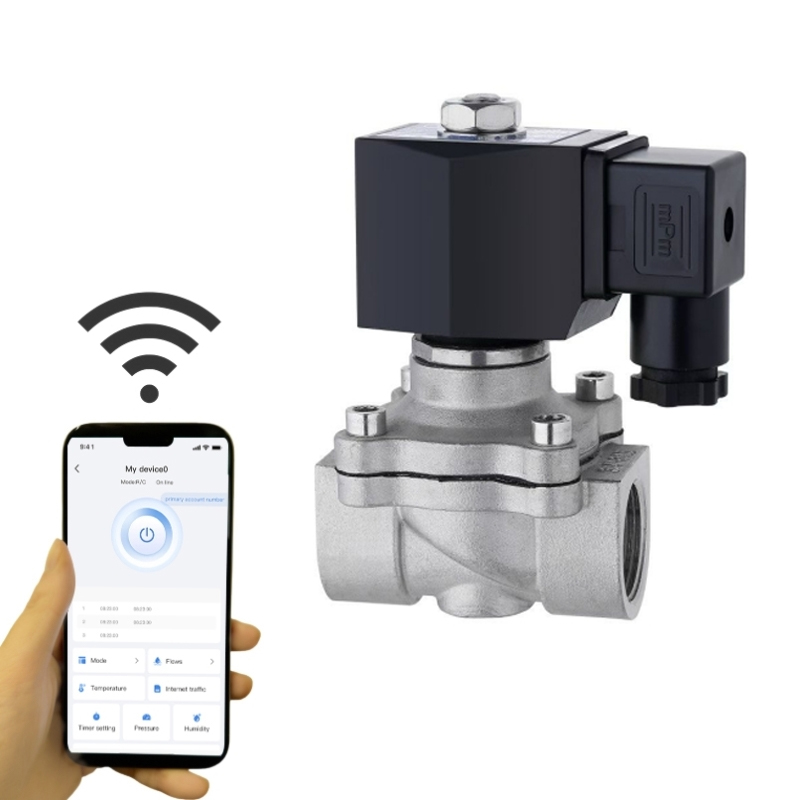
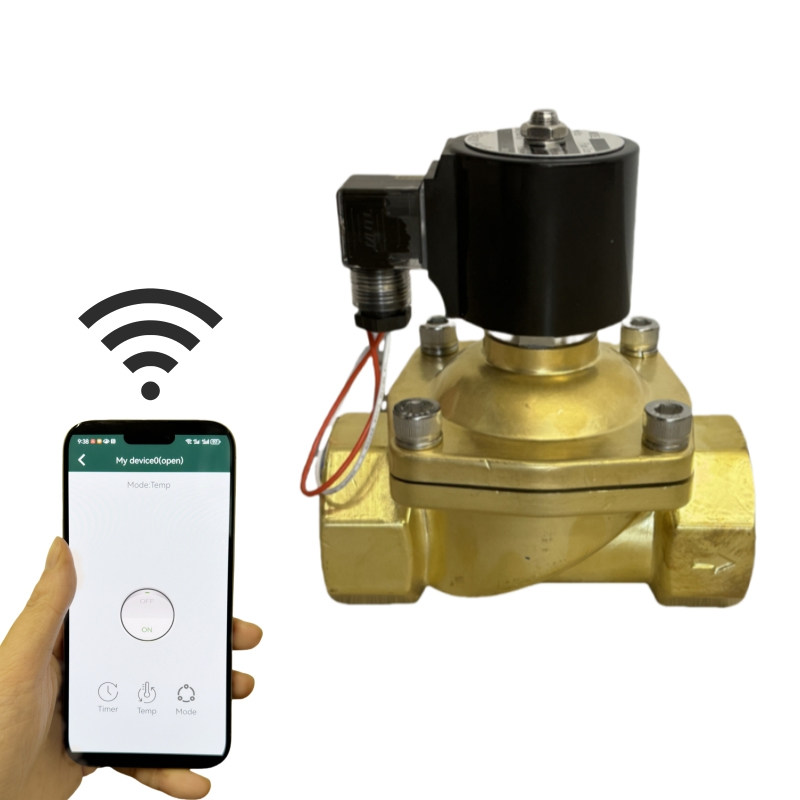
Sealing materials are equally critical. PTFE and PEEK provide chemical inertness and dimensional stability under sustained pressure. FKM (Viton) seals handle both high temperatures and hydrocarbon media. For aggressive corrosive environments, EPDM or PTFE-lined bodies paired with 304 or 316 stainless steel housings deliver the resistance needed. Our high pressure solenoid valve series covers rated pressures from 16 bar through 100 bar across brass and stainless steel body options.
The oil and gas sector accounts for roughly 40% of global high pressure solenoid valve demand — and for good reason. Upstream extraction platforms, midstream pipelines, and downstream refineries all require on/off isolation at pressures no standard valve can sustain. A stuck-open valve in a high-pressure gas header isn't a maintenance event; it's a safety incident.
Chemical processing demands a different performance axis: corrosion resistance combined with pressure capability. Reactors and cracking units cycle aggressive media at elevated pressures. Stainless steel bodies with PTFE seals aren't a premium option here — they're the baseline. Our anticorrosive solenoid valves address exactly this combination of requirements.
Hydraulic systems in heavy industrial machinery — presses, injection molding equipment, CNC systems — rely on high pressure solenoid valves to control actuator movement with repeatable precision. A valve that drifts under load defeats the purpose of closed-loop control. Poppet-style valves, with their inherent lock-tight seating, are the standard solution.
Emerging applications are broadening the market further. Hydrogen dispensing infrastructure operates at up to 500 bar, with leak rates required below 1 ppm — a specification that only purpose-built high pressure solenoid valves can meet. Medical diagnostic equipment demands precise fluid dosing with no contamination risk. Aerospace fuel and coolant management systems require millisecond response times under extreme thermal gradients.
Maximum operating pressure must be verified against the system's peak transient pressure, not just nominal working pressure. Pressure spikes during valve actuation can exceed steady-state values by 20–30%. The valve's rated pressure ceiling should comfortably exceed this.
Temperature range affects both the fluid and the ambient environment around the coil. Seals degrade outside their rated thermal window; coil resistance changes with temperature, altering pull-in force. Verify both fluid temperature and ambient temperature independently. Our high temperature solenoid valves are rated for elevated fluid temperatures where standard valves would fail prematurely.
Media compatibility drives material selection more than any other factor. Water is benign; hydraulic oil, hydrogen, and chlorinated solvents are not. Check wetted materials — body, seats, seals, and plunger — against the specific fluid, not just the fluid category.
Actuation type determines power requirements and fail-safe behavior. Normally closed valves shut off on power loss — the safer default for most high-pressure isolation applications. Normally open valves stay open on power loss, appropriate where flow must continue during a power fault. Latching designs hold position without continuous power, reducing energy consumption in battery-powered or remote systems — a characteristic covered in our latching valve product line.
A high pressure solenoid valve doesn't operate in isolation. Its performance is inseparable from system design: pipe sizing that avoids water hammer, filtration that protects the orifice from particulate damage, electrical supply that delivers the rated coil voltage without brownout. Proper installation practices for solenoid valves directly determine service life and leak-free performance.
The market for ultra-high-pressure solenoid valves is projected to reach $148.6 million in 2025 with a CAGR of 5.8% through 2033, driven by tightening safety regulations, growing hydrogen infrastructure, and the expansion of automated industrial systems. The engineering requirements are only becoming more demanding.
For applications where leakage is a liability — regulatory, financial, or physical — high pressure solenoid valves aren't a component choice. They're a design requirement. The question isn't whether to use them; it's whether the valve you select is genuinely rated for what your system will actually demand of it.



Copyright © 2025 Alahot (zhejiang) Technology Co., Ltd.
All Rights Reserved.
OEM/ODM Electric Solenoid Valves Manufacture
