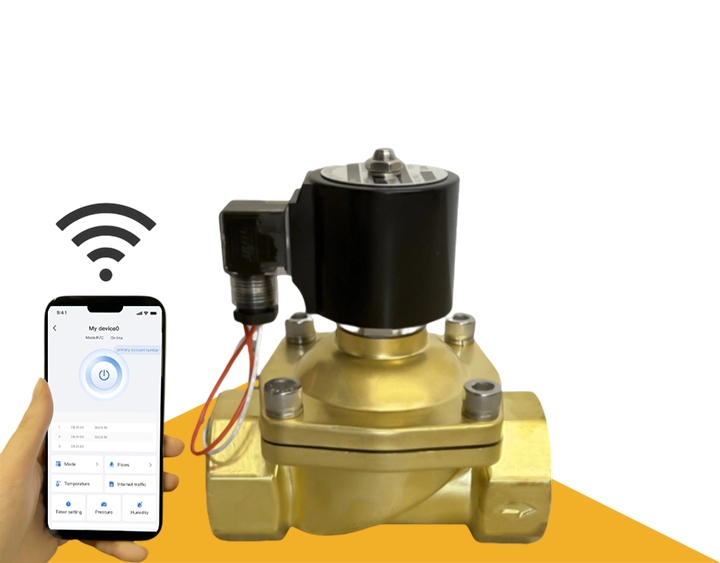
Industry knowledge
For remote-controlled solenoid valves, minimizing response time is essential for precise system control. Delays in actuation can disrupt fluid or gas flows, especially in automated processes or irrigation networks. Engineers focus on optimizing coil voltage, plunger mass, and valve orifice dimensions to ensure swift and reliable operation under app commands.
- Using low-inductance coils reduces electrical delay during energization.
- Fine-tuning spring tension and plunger alignment prevents mechanical lag.
- Implementing real-time monitoring via the app allows instant feedback and adjustments.
Energy-Saving Features in Remote Control Valves
App Remote Control Solenoid Valves can consume significant energy when continuously actuated. Integrating energy-saving strategies such as latching mechanisms and modulated actuation reduces power consumption while maintaining performance.
- Latching solenoid designs hold the valve state without continuous current draw.
- PWM (Pulse Width Modulation) control lowers average coil power during operation.
- Adaptive actuation schedules triggered by app analytics optimize energy use based on actual demand.
Maintaining Secure Connectivity for Remote Valves
Security is a major concern for solenoid valves controlled via apps. Unprotected connections can be vulnerable to unauthorized access, potentially leading to system failures or safety hazards. Implementing encryption, user authentication, and network monitoring is crucial for reliable operation.
- End-to-end encryption ensures that commands sent from the app cannot be intercepted.
- Two-factor authentication prevents unauthorized remote control.
- Periodic firmware updates patch security vulnerabilities and enhance system stability.
Integration with Smart Home and Industrial Systems
App-controlled solenoid valves can be integrated into larger smart home or industrial automation systems. This enables centralized monitoring, predictive maintenance, and automated responses to environmental changes or operational requirements.
- Centralized dashboards allow simultaneous control of multiple valves from a single app interface.
- Integration with sensors enables automatic shutoff or modulation based on flow, pressure, or temperature data.
- Compatibility with standard IoT protocols facilitates communication with HVAC, irrigation, or chemical processing systems.
Troubleshooting Connectivity and Operational Errors
Remote-controlled solenoid valves may experience connectivity issues or unexpected operational errors. Proactive troubleshooting ensures consistent performance and minimizes downtime in both home and industrial applications.
- Check WiFi signal strength and ensure the app and valve firmware are compatible.
- Inspect power supply stability to prevent intermittent valve operation.
- Regularly verify that valve actuations match the app commands to detect possible mechanical or software issues early.
Performance Metrics for Remote Control Applications
Tracking performance metrics is essential for optimizing app-controlled solenoid valves. Metrics such as response time, duty cycle, and actuation success rate provide insights into system health and operational efficiency.
| Metric |
Recommended Value |
Application |
| Response Time |
≤50 ms |
Irrigation & HVAC |
| Duty Cycle |
≤30% |
Continuous Fluid Control |
| Actuation Success Rate |
≥99% |
Remote Automation |



 English
 Español

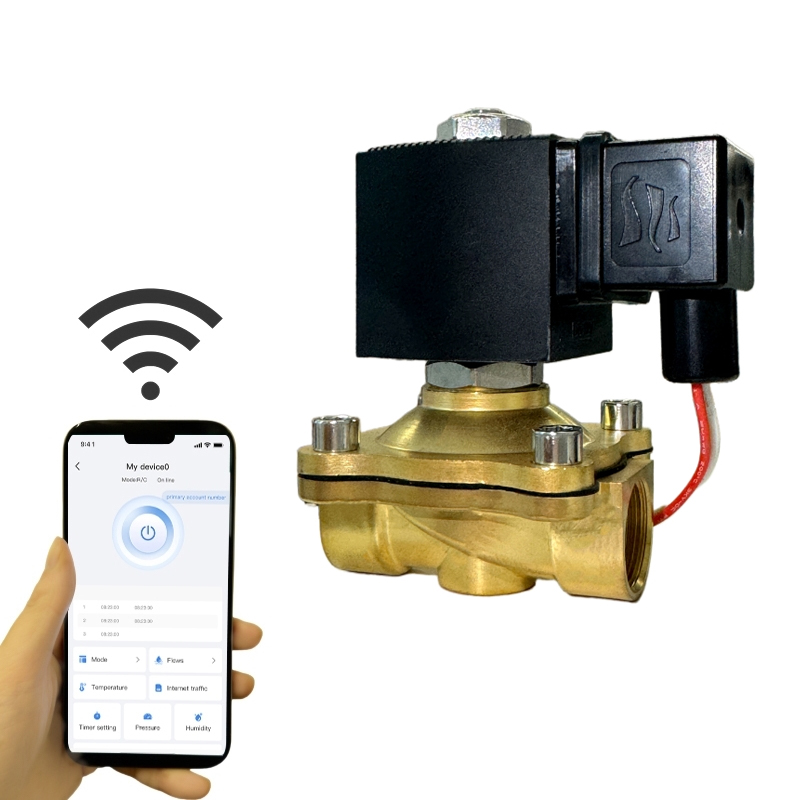 This brass app-controlled solenoid valve is designed for remote automation and intelligent fluid control across a wide range of applications. With ultra-low power consumption (only 0.5W), it supports ...
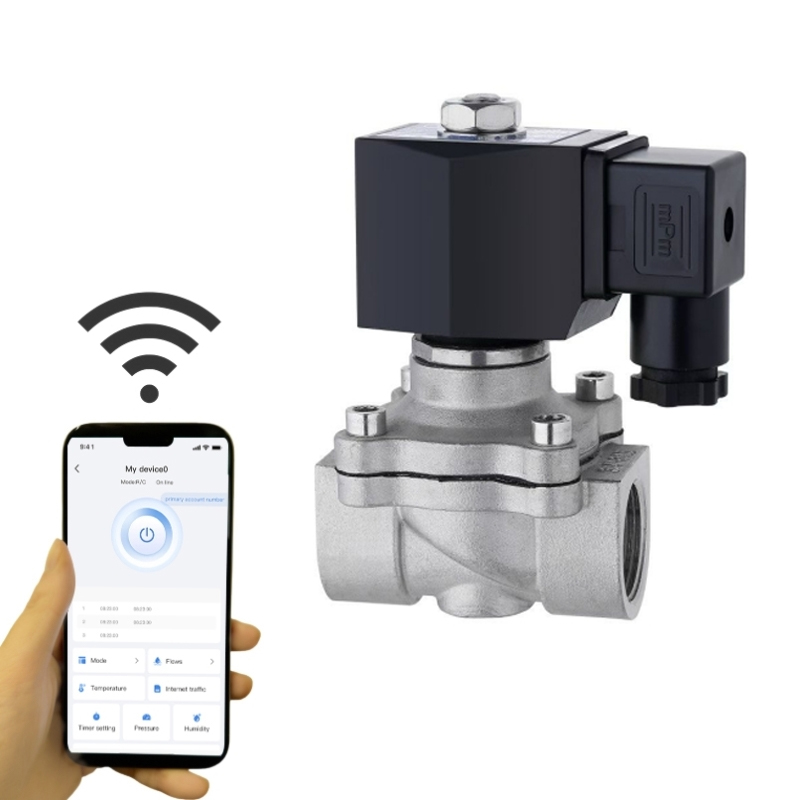 Crafted from durable 304 stainless steel, this App remote control solenoid valve is engineered for long-term performance in demanding environments. It supports multiple control modes—direct acting, la...
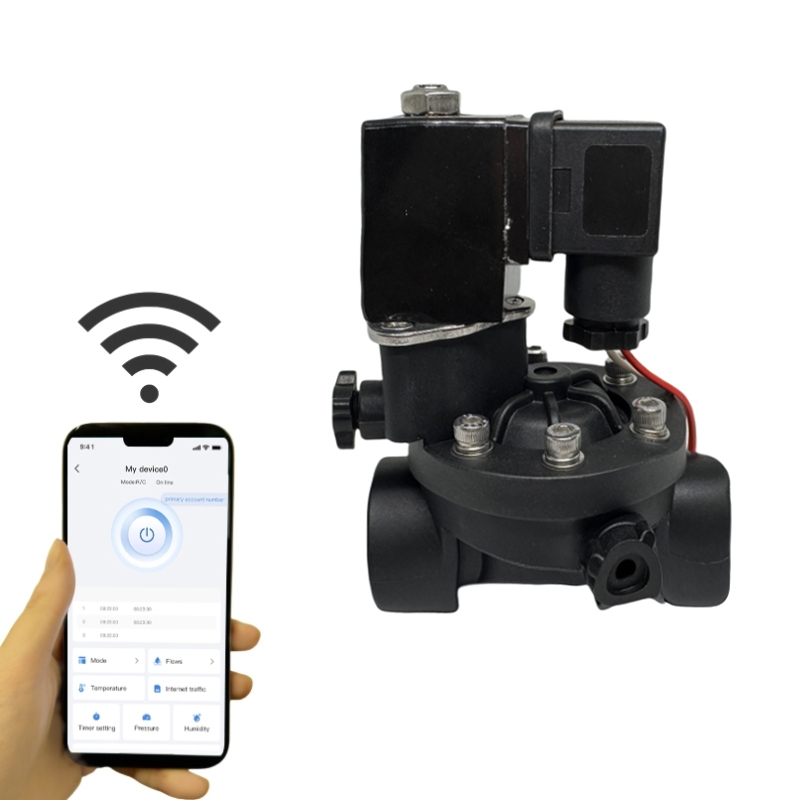 Made from corrosion-resistant engineering plastic, this App-enabled solenoid valve offers a lightweight and cost-effective solution for smart fluid control systems. With ultra-low power consumption of...