Industry knowledge
Optimizing Response Time and Hysteresis for Espresso Extraction
In high-performance coffee machines the transient behaviour of coffee machine solenoid valves can directly affect extraction consistency. Key contributors to response time are coil inductance, driver voltage/current capability, armature mass and return spring stiffness. Reducing effective coil inductance (while keeping thermal limits) and using a higher drive voltage during the pull-in phase shortens the pull-in time; a controlled lower holding voltage reduces power dissipation. Hysteresis management benefits from magnetic circuit design that minimizes flux leakage and from matched mechanical tolerances between plunger and sleeve. When we design valves we balance these parameters so you get fast, repeatable shots without overheating the valve coil.
Material Selection and Food-Safety Considerations for Brewing Systems
Material choice is not just about corrosion resistance — it strongly influences wettability, taste transfer and cleanability. For wetted paths, use FDA/USP-compliant stainless steels (316L where chlorides or acidic cleaners are present) or high-grade PEEK for hot water and steam. Elastomers should be selected for temperature and chemical compatibility; EPDM and FKM are common for hot water, while silicone is often used where flexibility and taste neutrality are priorities. Surface finish (Ra) of metal wetted areas matters: smoother finishes reduce biofilm and mineral adhesion, improving CIP performance.
Thermal Management: Duty Cycle, Coil Heat and Steam Exposure
Valves in coffee machines experience high duty cycles and elevated ambient temperatures near boilers. The coil's temperature rise depends on power dissipation and thermal path to the valve body. Use thermal class insulation rated above the expected steady-state coil temperature and consider intermittent PWM hold strategies or two-stage drive (full on for pull-in, reduced for hold). For valves exposed to steam, protect the coil and electronics from radiated heat and moisture — thermal barriers, heat-sink flanges, and conformal coating on PCBs increase reliability.
Practical drive strategy
- High-voltage, short-duration pull-in pulse (faster actuation).
- Lower holding current via PWM or series resistor to reduce heat.
- Thermal monitoring where long hold times are expected to prevent coil damage.
Integrating Sensing for Closed-Loop Flow and Temperature Control
Embedding pressure or flow sensors near solenoid valves enables closed-loop control that compensates for pump variability and scale build-up. Typical implementation uses a fast pressure sensor upstream of a valve and a microcontroller to modulate valve duty cycle (or open time) to maintain desired flow profiles during pre-infusion and extraction. Temperature sensors on the valve body detect abnormal thermal events and can trigger a safe shutdown. We integrate sensing and firmware primitives so valves not only switch water, they help the machine adapt on the fly.
Proportional Control vs. On/Off: When to Use Which
For simple water routing, fast on/off valves are economical and reliable. When you need fine flow modulation (e.g., ramping pressure during pre-infusion or micro-metering water for pour-over automation), proportional solenoid valves or pulse-width modulation of a fast on/off valve can provide smoother control. Proportional valves require current control loops and characterization (flow vs. current) and are more sensitive to viscosity and temperature changes; include lookup tables or adaptive algorithms in firmware to maintain consistent performance.
Comparison table: quick selection guide
| Requirement |
Recommended Valve Type |
Notes |
| Binary water routing |
Fast on/off solenoid |
Low cost, high reliability |
| Flow shaping / pre-infusion |
Proportional valve / PWM control |
Requires characterization and control |
| Steam or high-temp switching |
High-temp rated valve with thermal barrier |
Protect coil and electronics from radiant heat |
Maintenance Practices: Preventing Clogs and Mineral Build-Up
Coffee machines are prone to scale and particulate contamination that reduce valve flow or jam the armature. Implement filter stages upstream (mesh or sintered filters) and design valve internal clearances to tolerate micron-level particles. Regular automated flush cycles and compatibility with common descaling agents (verify elastomer compatibility) help extend service intervals. For designs with replaceable cartridges or seats, provide a quick-change procedure to minimize downtime.
- Install a 50–200 μm mesh pre-filter depending on water quality.
- Schedule automated short flushes after long idle periods to clear deposits.
- Design for serviceability: replaceable seals and seats reduce repair complexity.
EMC, Noise and Mechanical Vibration Considerations
Solenoid switching produces fast current transients and can cause EMI that affects nearby sensors and control electronics. Use snubbers, TVS diodes or proper flyback diodes arranged according to whether you need fast turn-off or suppressed ringing. Mechanically, plunger impact can generate audible click noise and transmit vibration; soft landing features (damped armature designs) and elastomer mounts reduce acoustic emissions. We incorporate EMC filtering and damping where precision sensors are co-located with valves.
Smart Valve Features: Communications, Diagnostics and Firmware
Embedding microcontrollers and a communication interface (I2C, SPI, UART, CAN, or Modbus) enables coffee machine solenoid valves to report health metrics (coil temperature, actuation counts, leak detection) and accept higher-level commands (flow profiles, calibration routines). Diagnostic telemetry helps predict maintenance needs via thresholds or cloud analytics. We provide firmware hooks for autocalibration routines so each valve can self-tune its actuation timing against measured pressure/flow feedback.
Telemetry examples
- Actuation count and average pulse width for wear prediction.
- Real-time coil temperature and supply voltage monitoring.
- Leak detection via microflow sensing during idle periods.
Qualification and Test Procedures for Reliable Performance
A robust qualification program covers mechanical endurance (millions of cycles), thermal soak (extended exposure at expected ambient/steam temperatures), chemical resistance (exposure to descalers and detergents), and functional aging (actuation under applied pressure). Test rigs that replicate real duty cycles — including simultaneous thermal and mechanical stress — uncover failure modes that bench tests miss. When we qualify valves for coffee applications, we run combined stress tests and provide detailed test reports for OEM integration assurance.
Design for Manufacturability and Field Service
Consider assembly tolerance stacks, ease of sealing, and diagnostic access during the design phase to lower manufacturing cost and service time. Modular valve cartridges that can be swapped without breaking other connections speed field repairs and reduce mean time to repair. We optimize designs to simplify machining steps and minimize critical tolerances while maintaining performance — giving customers valves that are both high-performing and practical to manufacture and service.



 English
 Español

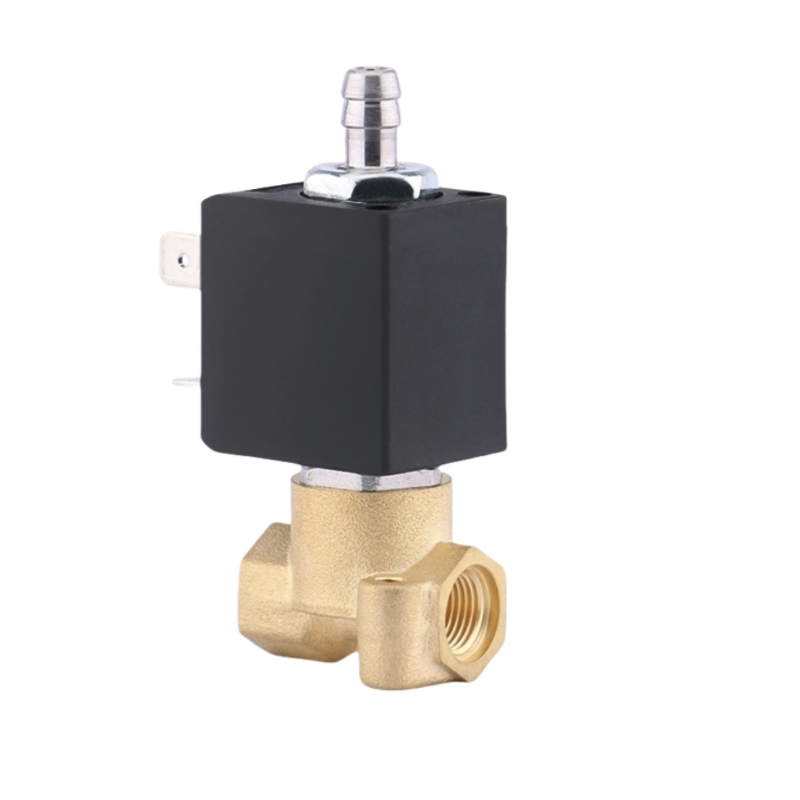 Designed for use in espresso machines, automatic brewers, and commercial coffee systems, the 1/8" Direct Acting Brass Coffee Machine Solenoid Valve ensures accurate control over water flow and pressur...
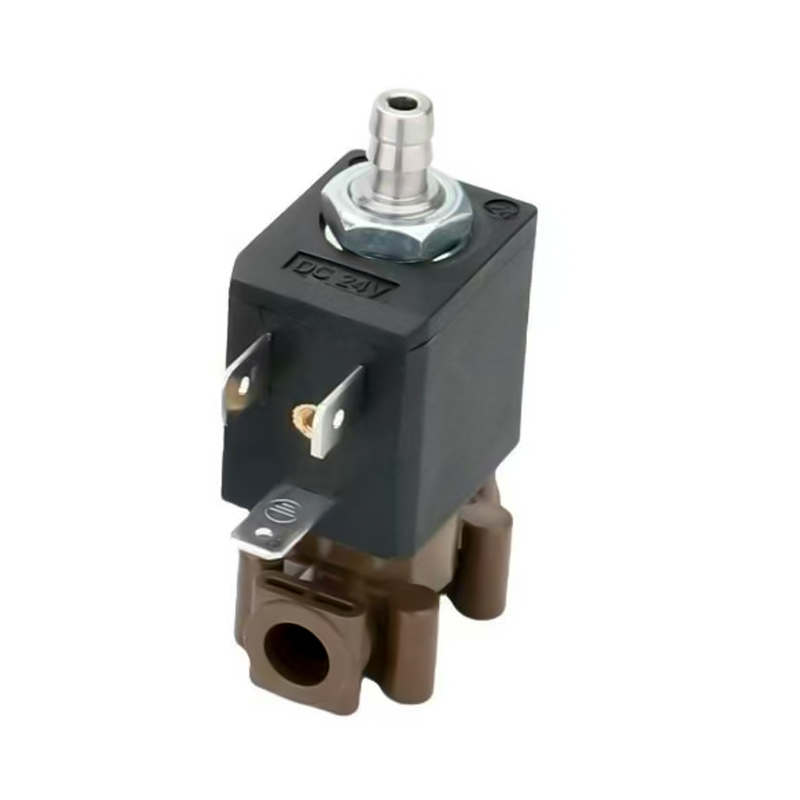 The Lightweight Plastic Coffee Machine Solenoid Valve is part of Alahot's AC/ACK series, specifically engineered for espresso machines, automatic brewers, and other compact beverage systems. Made with...