Industry knowledge
Understanding IP68 in Fountain Solenoid Valves — practical depth and duration
IP68 is often quoted as a single badge of “submersible,” but for fountain applications you must translate that into actionable limits: the specified immersion depth and duration (for example, 1–3 m for 30 minutes vs. 5–10 m for continuous service) and the test medium (fresh vs. chlorinated water). When specifying a valve for a fountain basin, request the manufacturer’s exact IP68 test report showing depth, time, and whether dynamic conditions (flow, waves) were present. Continuous submersion in chemically treated water accelerates seal aging; choose IP68 fountain solenoid valves whose potting and gland systems were validated in an equivalent chemical environment.
Materials, coatings and corrosion control for long life in decorative water features
Material selection is a primary determinant of life expectancy. For exposed wetted parts, austenitic stainless steel (316L) and engineering polymers (PVDF, PEEK) offer best-in-class resistance to chlorination and mineral scaling. Internals such as armatures and springs should be either stainless or electroplated with nickel/tri-metal finishes; avoid plain carbon steel. External surfaces benefit from thin, conformal coatings or electro-polishing to minimize pitting initiation sites. In my experience designing smart valves for water features, we pair corrosion-resistant alloys with polymer seats to reduce galvanic interaction while maintaining sealing performance.
Sealing techniques, cable glands and entry points — where most failures start
Proper sealing is multi-layered: dynamic seal at the stem/actuator, static O-ring at body joints, and a sealed electrical entry. For IP68 fountains pay close attention to three details: (1) cable glands rated for continuous submersion with secondary potting behind the gland, (2) double O-ring stacks with different durometers to handle thermal cycling, and (3) internal potting of the coil and connector block using flexible, low-modulus epoxy or polyurethane to avoid brittle cracking under vibration. Where serviceability is required, design for a replaceable gland assembly, not permanent potting.
Flow control strategies: on/off vs. proportional control for fountains
Traditional solenoid valves are binary (open/closed), which works well for simple jets. However, modern shows and energy-conscious installations often demand proportional control for smooth ramping. Options:
- Pulse-width modulation (PWM) driving of fast solenoids to emulate partial opening — effective for moderate throttling but requires valve designs rated for rapid cycling and thermal management.
- True proportional hydraulic valves with a controlled stroke — better linearity and less wear, but higher cost and more complex control electronics.
- Hybrid approach: coarse on/off staging combined with tuned nozzle geometry for the fine control of jet height and stability.
When integrating with show control, we provide valve drivers that accept PWM, 0–10 V, or 4–20 mA inputs so the same valve platform can be used for both simple and complex installations.
Electrical design: coil protection, duty cycle and thermal considerations
Coil heating is the most common electrical failure mode in submerged valves. Account for continuous-duty vs. intermittent-duty coils and verify coil insulation class (typically Class F or better for wet environments). Use series current reduction (or electronic hold current) to minimize steady-state heating while preserving response time. Also specify coil resistance and insulation resistance test methods for field maintenance — a simple coil ohm check and megohmmeter reading can detect moisture ingress long before catastrophic failure.
Filtration, anti-water hammer and hydraulic best practices
Protect seats and orifices from particulate damage with a two-stage approach: coarse strainers at the pump and fine, replaceable cartridge filters upstream of the valves. To reduce water hammer in fast-switching fountain valves, combine soft-closing pilot circuits or slow-ramp drivers with small surge absorbers and properly sized upstream piping. Place check valves to prevent reverse flow into sensitive valve chambers when multiple jets are manifolded from a common header.
Smart integration: sensors, protocols and local diagnostics
Embedding sensing greatly simplifies operation and reduces downtime. Useful sensors include valve position (hall-effect or linear potentiometer), coil temperature, and leak-detection electrodes. For communication, support common building and show-control protocols — Modbus RTU/TCP, CANopen, and IO-Link are practical choices. We design our valves to stream diagnostics such as cycle count, coil resistance trend and temperature to the controller so operators can do predictive maintenance rather than reactive replacement.
Maintenance checklist and fast field troubleshooting
A short, practical maintenance routine prevents most failures: visually inspect glands and cable sheath quarterly; measure coil resistance and insulation annually; clear upstream filters monthly in high-debris installations; and exercise valves under dry-run-safe conditions to confirm smooth actuation. If a valve fails in-situ, check these items in order: power supply and driver signals, coil resistance, external leaks at glands, then internal seat wear. Keep a spare gland kit and a seat/armature kit on site for rapid repair.
Comparative selection table for common IP68 fountain valve configurations
| Model |
Port size |
Voltage |
Max submersion |
Response time |
Special features |
| AH-IP68-15 |
1/2″ |
12 VDC |
3 m continuous |
< 30 ms |
Potting + replaceable gland |
| AH-IP68-PRO |
3/4″–1″ |
24 VDC |
5 m continuous |
Proportional 0–100% in 200 ms |
Integrated position sensor, Modbus |
| AH-IP68-MINI |
3/8″ |
12/24 VDC |
2 m intermittent |
< 50 ms |
Compact, low-power hold mode |
Troubleshooting example scenarios with corrective actions
Valve fails to open but coil gets power
If the coil is energized but flow does not start, check for clogged inlet screens, stuck armature from mineral deposits, or a failed return spring. Remove the IP68 fountain solenoid valve from the line to inspect the seat and armature; if mineral encrustation is present, ultrasonic cleaning or a mild acid soak (appropriate for the valve materials) can restore operation. For frequent re-occurrence, add filtration upstream or switch to a polymer seat less prone to scaling.
Intermittent leakage under submersion
Intermittent leaks usually point to seal extrusion, O-ring hardening, or micro-cracks from freeze–thaw or impact. Replace O-rings with the correct durometer and low-swelling material (e.g., FKM or EPDM as chemically appropriate). Confirm gland torque specs and retighten to manufacturer-recommended values after thermal cycles. We design our products so field-replaceable seals are accessible without disturbing the electrical potting.
Final practical checklist before installation
- Confirm the vendor’s IP68 test depth and duration and whether tests used static or dynamic immersion.
- Match valve materials to water chemistry (chlorine, salt, pH) and plan for sacrificial anodes or coatings if necessary.
- Specify cable glands for continuous immersion and request a replaceable-gland option for field serviceability.
- Design upstream filtration and surge mitigation into the system; valves alone cannot protect against poor hydraulic design.
- Plan for diagnostics: include a way to read coil resistance and valve position to enable predictive maintenance.
If you want valves that combine robust IP68 submersion capability with embedded sensing and flexible controls, we can adapt our platforms to your fountain’s hydraulic and control requirements — we build valves that think and report, not just switch. Contact us with your site water analysis and control interface and we’ll propose a validated configuration.



 English
 Español

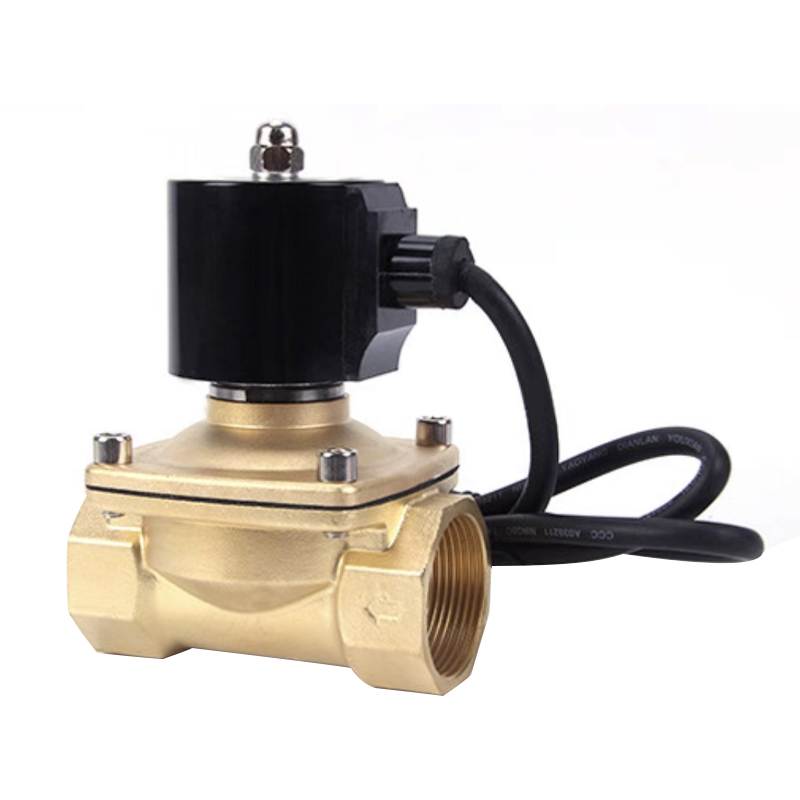 The ALF Series Brass IP68 Fountain Solenoid Valve is a submersible direct-acting valve designed for use in underwater fountain systems, decorative water features, and aquatic installations. Built with...
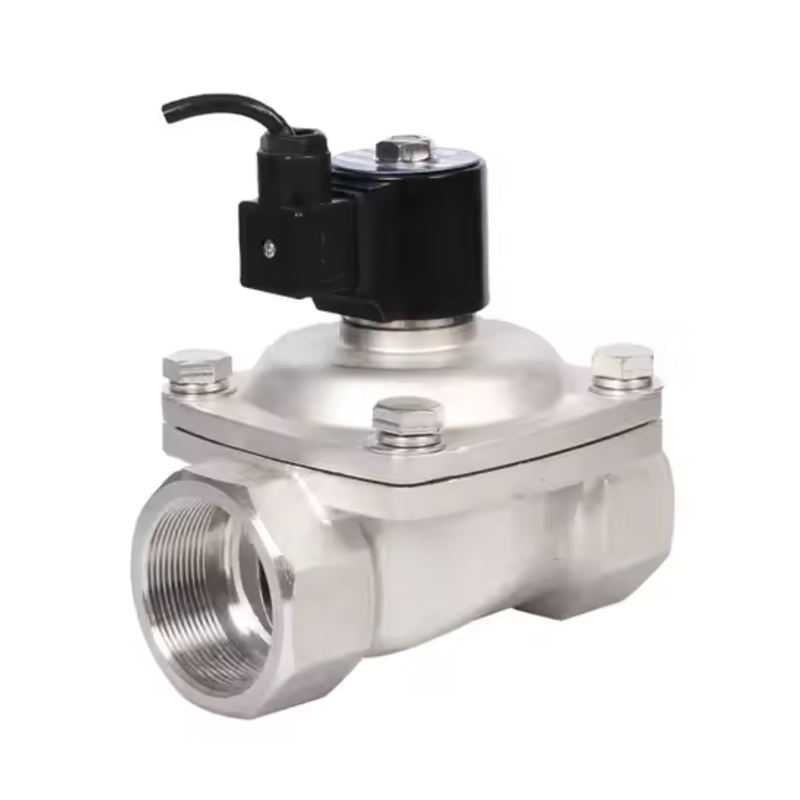 The ALF Series 304 Stainless Steel IP68 Fountain Solenoid Valve is engineered for long-term operation in submerged environments such as fountains, water features, and aquatic systems. Constructed from...