


 English
 Español
News
Home / News / Industry News / How do Stainless Steel Check Valves Compare with Brass or Plastic Check Valves?

News
Content
Check valves may look simple at first glance, but the choice of material plays an enormous role in how they perform, how long they last, and where they can be safely applied. Whether used in residential plumbing, industrial fluid systems, chemical dosing lines, or irrigation networks, the material of a check valve helps determine its resistance to corrosion, heat, pressure, and various media. Among the most common options on the market today are Stainless Steel Check Valves, brass check valves, and plastic check valves. Each comes with strengths and limitations, making it essential for engineers, purchasing teams, and maintenance personnel to understand how they compare when selecting the right valve for a task.
One of the most significant differences between Stainless Steel Check Valves and those made from brass or plastic is their mechanical strength.
Stainless steel, especially grades like 304 or 316, offers exceptional tensile strength and impact resistance. Valves made from this material tend to withstand harsh operating conditions, including vibration, water hammer, and continuous cycling. They hold up well under demanding environments such as high-pressure pump systems or industrial washdown lines.
Brass valves also provide good durability, though they generally fall short of stainless steel in terms of raw strength. Brass resists cracking and denting reasonably well, but it becomes more vulnerable in systems involving extremely high pressures or where mechanical shocks are frequent.
Plastic check valves—often made from PVC, CPVC, or polypropylene—are inherently less durable. While they perform adequately in low-pressure or non-critical applications, they are not ideal where physical stress, heavy loads, or accidental impacts may occur. Over-tightening during installation can even cause the body to crack.
In essence, stainless steel sits at the top of the durability hierarchy, brass occupies the middle ground, and plastic fills the niche of lightweight, low-to-moderate stress environments.
Corrosion resistance can make or break a valve’s service life.
Stainless Steel Check Valves, particularly those made with 316 stainless steel, offer broad protection against rust, pitting, and chemical attack. They are commonly used for aggressive fluids, seawater environments, acidic solutions, and areas where moisture exposure is constant. For industries like marine plumbing or food processing, stainless steel’s ability to resist contamination and surface degradation is a significant advantage.
Brass, on the other hand, has moderate corrosion resistance. In potable water systems, brass performs reliably. However, it may not fare as well with chlorinated water, ammonia compounds, or corrosive industrial chemicals. Dezincification—a process where zinc leaches from brass—can be a concern in certain water qualities or fluid compositions. When dezincification occurs, the valve weakens structurally and may eventually fail.
Plastic valves excel in chemical compatibility for many applications. PVC and CPVC resist acids, alkalis, and salts extremely well. They are widely used in chemical dosing and wastewater treatment. Yet plastic materials degrade under UV exposure unless stabilized, and certain solvents or hydrocarbon-based fluids can weaken or dissolve the plastic.
This means stainless steel offers the broadest overall corrosion resistance in mixed or unpredictable environments, while plastics may outperform metal in very specific corrosive chemical applications. Brass is best for general plumbing but not for highly corrosive fluids.
The operating limits of check valves shift dramatically depending on material composition.
Stainless Steel Check Valves comfortably manage high temperatures and pressures. Many models operate in ranges exceeding 200 psi and temperatures approaching or surpassing 200°C, depending on the design. This makes them suitable for steam lines, thermal fluid systems, compressed air networks, and industrial process loops.
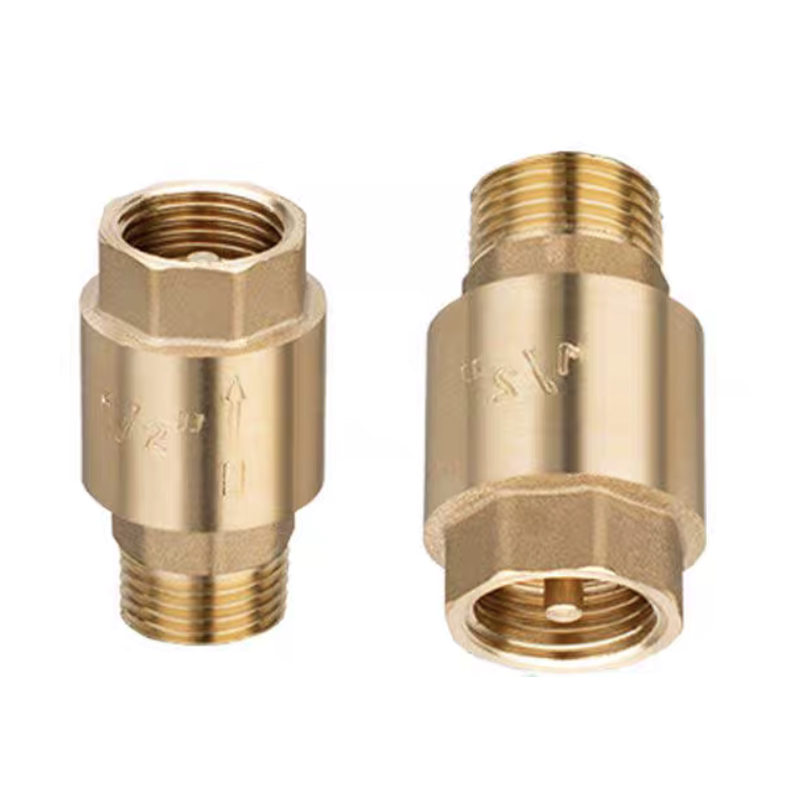
Brass valves, while sturdy, have somewhat lower upper limits. They typically handle moderate heat and pressure well, but brass softens at high temperatures and may deform under extreme stress. For most residential and light commercial uses, brass is more than adequate; however, it is not the go-to choice for heavy industrial environments involving high heat.
Plastic check valves have the narrowest operating window. PVC softens at temperatures above 60°C (140°F), and even CPVC—while better—still cannot match metals. Pressure limits also drop as temperatures rise. Because of these constraints, plastic valves are best suited for cold-water systems, light chemical transfer, or low-temperature industrial processes.
Material choice influences not just performance but practicality.
Stainless steel valves are the heaviest of the three, which can matter in applications where weight restrictions apply, such as portable equipment or suspended pipe systems. Installers must ensure proper support, especially on larger valve sizes.
Brass is lighter than stainless steel while still offering a solid, familiar feel. It strikes a balance between strength and ease of handling, which is one reason it remains popular in plumbing and HVAC installations.
Plastic valves, being extremely lightweight, can often be installed without special bracing or reinforcements. This can reduce installation time and make them ideal for DIY or low-impact projects. However, the ease of handling must be weighed against their lower robustness.
Budget plays a crucial role in deciding which valve to use.
Stainless Steel Check Valves usually come with the highest upfront cost. The alloy itself is more expensive, and the machining requirements add to manufacturing complexity. Yet their long service life can make them more cost-effective over years of operation, especially in environments that naturally degrade brass or plastic.
Brass check valves fall into the mid-range price category. For homeowners or general contractors, brass often offers a practical balance between performance and affordability.
Plastic valves are typically the most economical option. Their low initial cost makes them appealing for large-scale installations or where the fluid medium is non-aggressive and the system pressures modest. However, replacement frequency should be considered when evaluating total life-cycle cost.
Different materials impact the cleanliness of fluid systems.
Stainless steel is non-porous and maintains a clean surface that resists bacterial growth. This property makes Stainless Steel Check Valves common in food, beverage, and pharmaceutical applications. They are also easier to sanitize and maintain.
Brass, depending on composition, can leach small amounts of metals into fluids, particularly in low-pH water. Modern lead-free regulations have improved safety, but brass still does not match stainless steel’s hygienic profile.
Plastic valves generally do not contaminate fluids, but they can degrade over time, shedding particles if exposed to UV light or aggressive chemicals. For ultrapure water systems, plastic may be acceptable, but long-term stability must be evaluated.
Material sustainability is increasingly relevant.
Stainless steel is highly recyclable and retains its value well. Its long service life also reduces material waste.
Brass is also recyclable, though repeated recycling may alter its alloy properties.
Plastic, while lightweight and inexpensive, poses environmental challenges. Recycling rates for PVC and similar plastics remain low, and improper disposal can contribute to environmental pollution. In long-lasting installations, however, plastic’s reduced need for frequent replacement helps mitigate these concerns slightly.
Choosing between Stainless Steel Check Valves, brass check valves, and plastic check valves rarely comes down to a single factor. Instead, the best option depends on the application’s environment, pressure and temperature requirements, fluid characteristics, and long-term maintenance expectations.
Choose Stainless Steel Check Valves when system reliability, corrosion resistance, and high performance are essential. They excel in industrial, marine, high-pressure, or hygienic applications.
Choose brass valves when you need a dependable, moderately priced option for general plumbing, heating, or mechanical systems that do not involve corrosive fluids or extreme operating conditions.
Choose plastic valves when cost efficiency, corrosion resistance to certain chemicals, or lightweight installation are the primary requirements, and when pressures and temperatures remain modest.
By understanding the strengths and trade-offs of each material, engineers and buyers can select a valve that not only meets immediate needs but continues performing reliably over time.





Copyright © 2025 Alahot (zhejiang) Technology Co., Ltd.
All Rights Reserved.
OEM/ODM Electric Solenoid Valves Manufacture
