


 English
 Español
 русский
 Français
 日本語
 ไทย
 Tiếng Việt
 عربى
 Deutsch
 Português
 Bahasa Melayu
 Türk

News
Home / News / Solenoid Valve Solutions / App Remote Control Solenoid Valves: Power, Wireless Signal, and Sizing Guide
News
Content
A rooftop irrigation controller can show a green Wi-Fi icon while the valve on the far side of the site stays closed, because the app reached the gateway but the coil never received a long enough pulse. That failure pattern is why app remote control solenoid valves should be specified as a control chain: phone, gateway, controller, actuator, and valve body.
An app remote control solenoid valve is a solenoid valve paired with a wireless controller and a mobile application layer that commands open, close, or timed states. The app does not change the hydraulics; it changes how the coil is energized, monitored, and recovered after a signal loss.
The app commands a controller, and the controller energizes or latches the coil; the valve body still does the hydraulic work. Separating those roles prevents a common buying mistake: treating a wireless module as if it were a valve specification.
In a typical remote-control valve, four parts have to agree:
Working rule: the app is an interface, the controller is the control, and the valve is the hydraulic element. If any one of those is underspecified, the installation will not behave like a remote-control system.
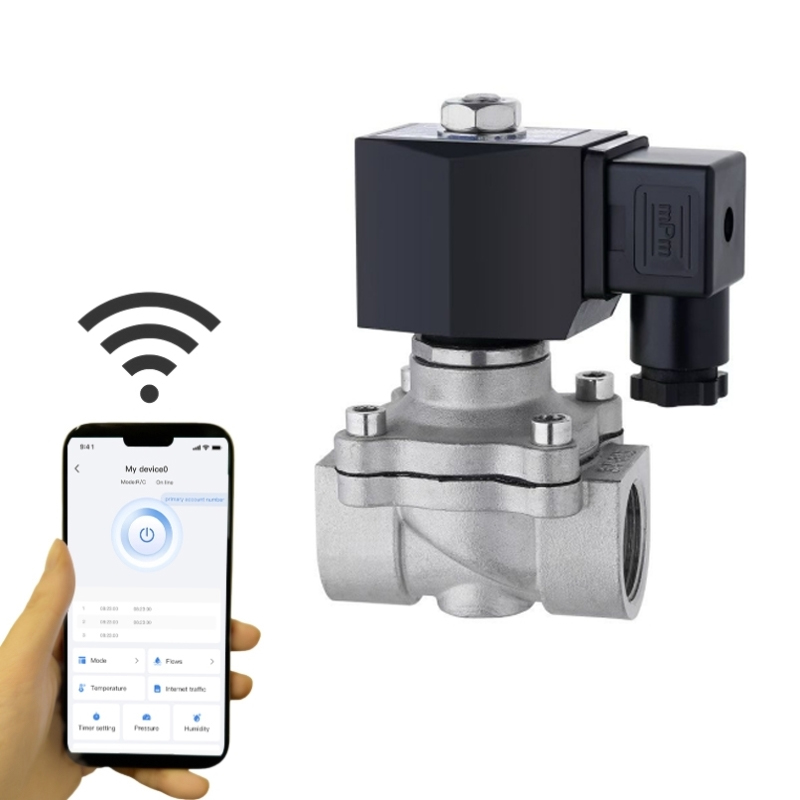
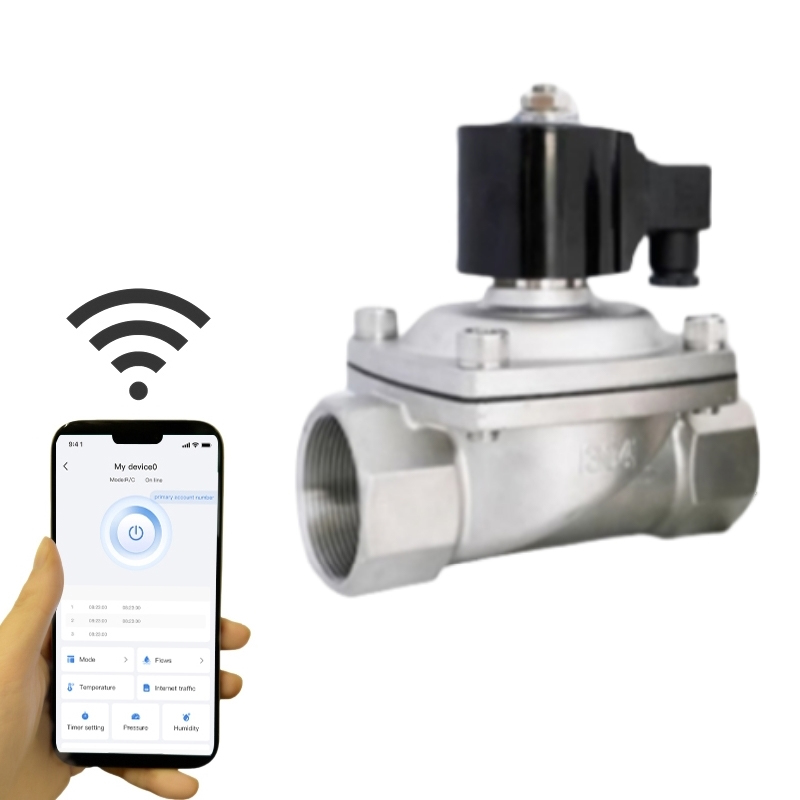
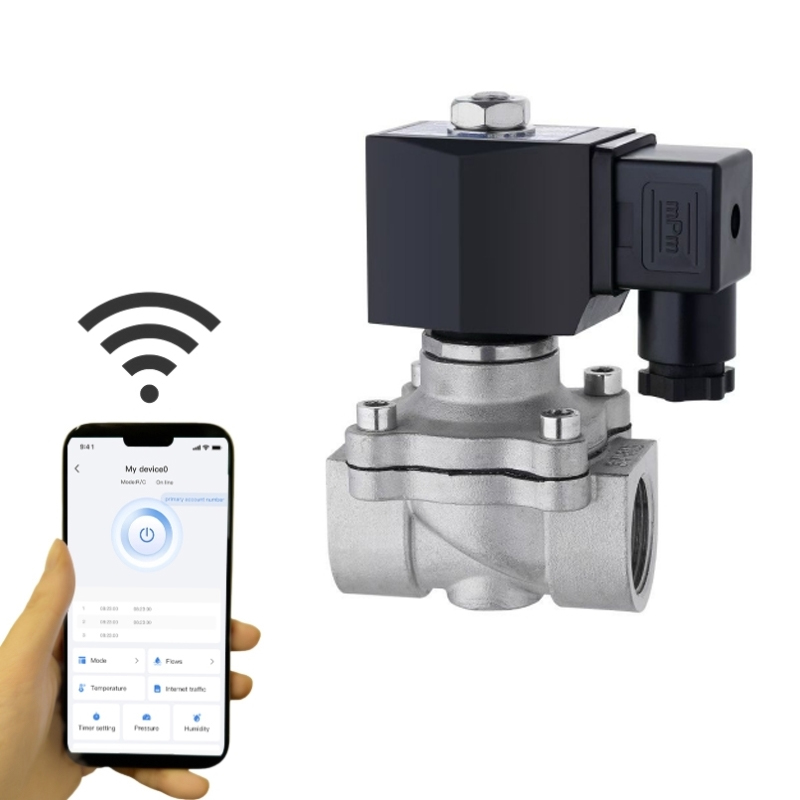
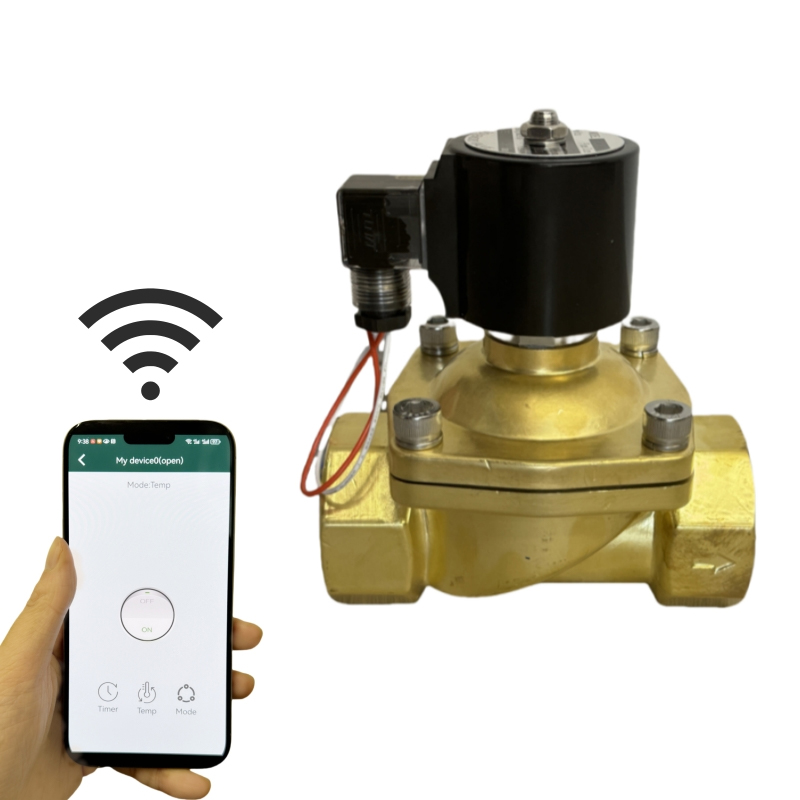 304 Stainless Steel App Remote Control Solenoid ValveView this 304 stainless steel valve for app switching and monitoring, with 0.5 W operation and direct-acting, latching, or pulse modes relevant to power budgeting.View Product →
Power budget decides feasibility: a continuously energized coil can drain a battery bank, while a latching actuator holds position at zero current. The app schedule matters less than the holding method and duty cycle.
| Architecture | Holding current | Best fit | Watch point |
| Direct-acting AC or DC | Continuous | Mains-powered skids and short duty cycles | Heat at 100 percent duty |
| Latching or pulse | Zero after the pulse | Battery irrigation, remote sites, solar cabinets | Pulse width and polarity |
| Pilot-operated | Continuous or latching | Higher flow with clean media | Minimum pressure differential |
A 5 W coil is not a low-power valve by itself. The number only becomes useful when the controller duty cycle and the actuator holding method are known.
A 5 W coil can be a sensible choice on a mains-powered skid with a short duty cycle. On a solar site, the same coil may need a larger panel and battery than a latching design, even if the valve costs less up front.
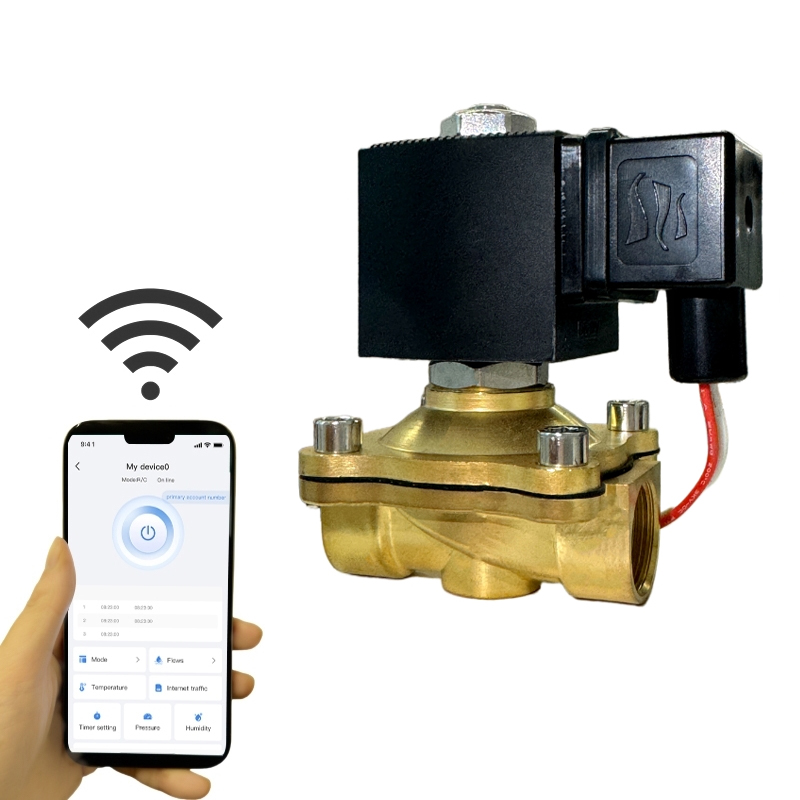
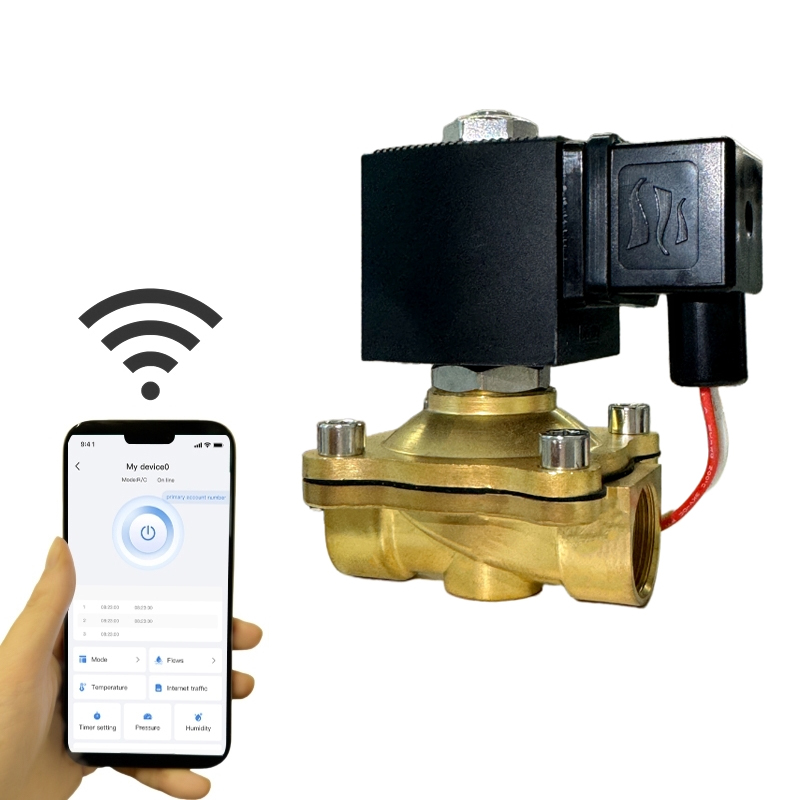
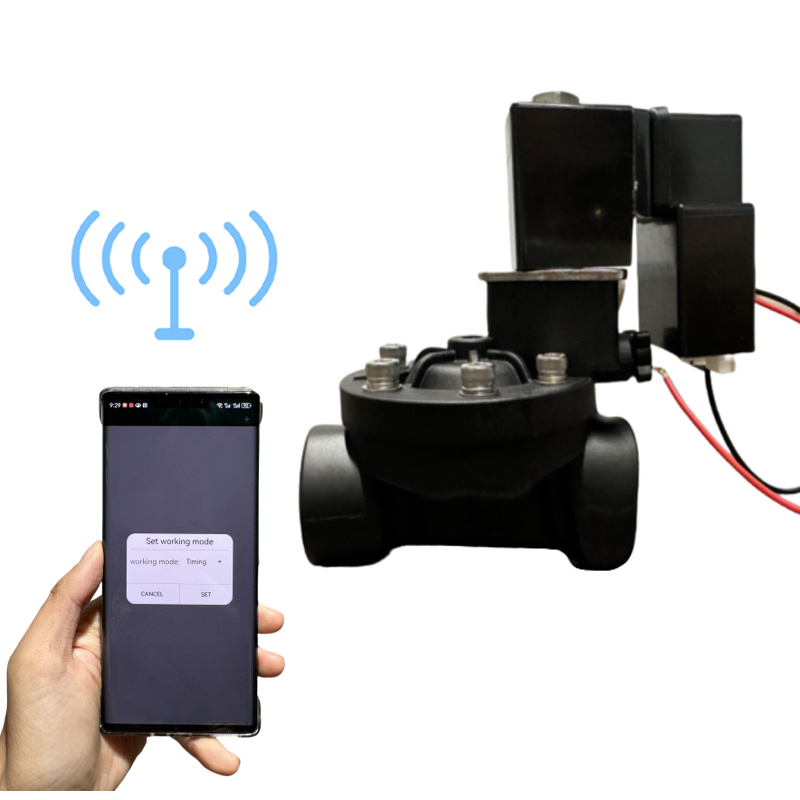 0.5W Brass App Remote Control Solenoid ValveThis brass valve supports app control and direct-acting, latching, or pulse modes, worth checking where 0.5 W consumption and local control reliability matter.View Product →
A reliable app remote control solenoid valve keeps a local schedule and a defined fail-safe position when the router, cloud, or phone is unavailable. The dashboard is useful for visibility, but the local controller is what protects the process.
Ask two questions before comparing app screens: what happens when the signal drops, and what happens when the phone is offline for a week.
For a deployment checklist, see the smart App and Wi-Fi solenoid valve selection guide.
Material and orifice sizing decide whether the valve survives the fluid, not just whether it opens on command. A valve that is smart on the app screen but undersized at the outlet will erode, chatter, or fail to seal.
Neutral water, irrigation, and HVAC. Good cost and availability. Check dezincification risk in aggressive water.
Higher pressure, hotter water, and many industrial fluids. Specify the seal compound, not just the body grade.
Light chemicals, compact skids, and shallow-well lines. Verify UV exposure and pressure rating.
Do not size from port size alone. Confirm flow coefficient, minimum pressure differential for pilot-operated designs, and seal compatibility against the actual media.
Before ordering, check four items:
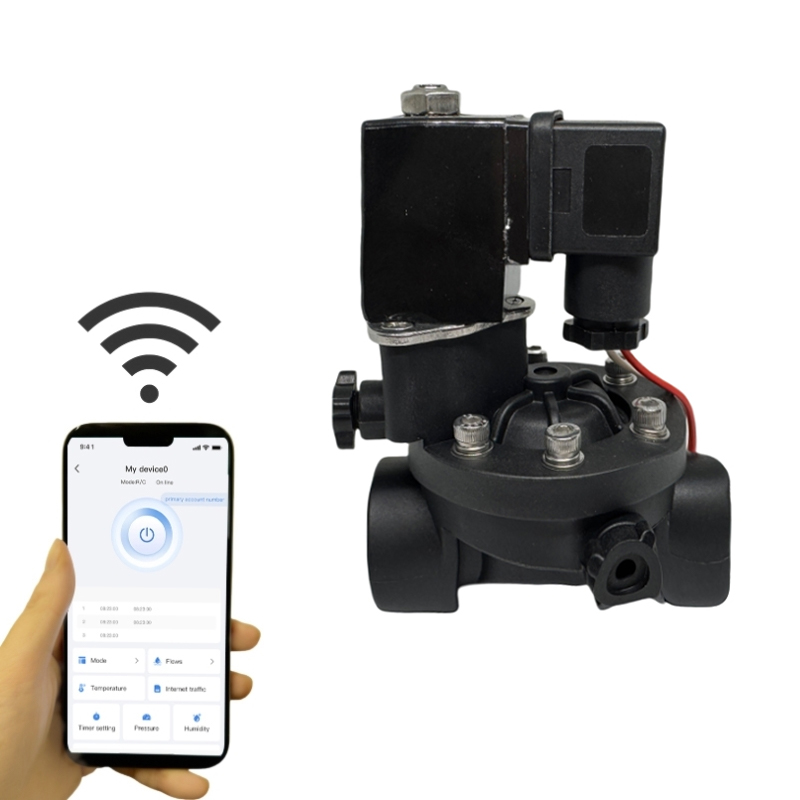
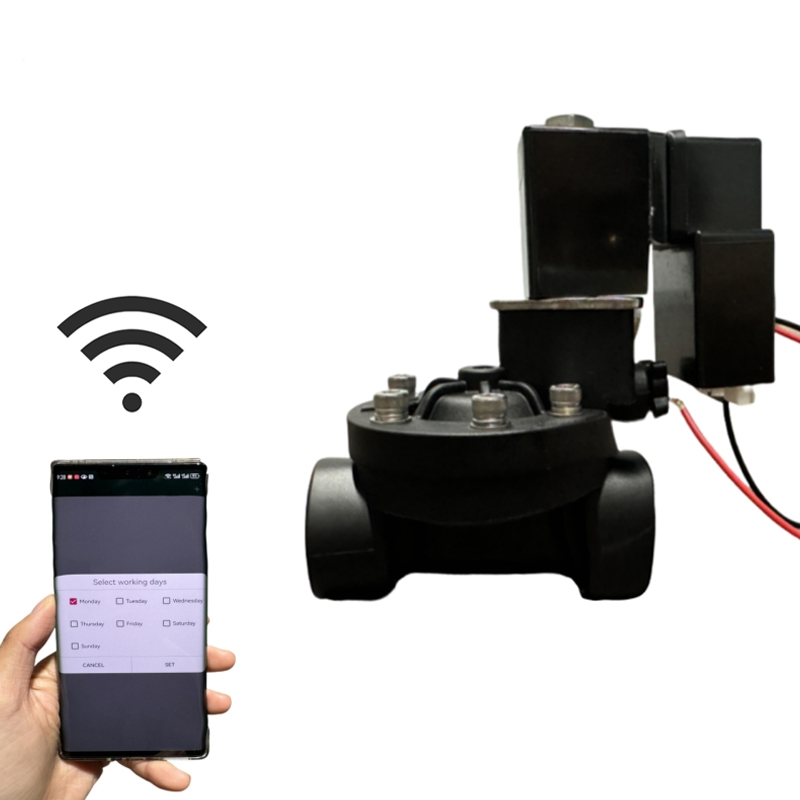
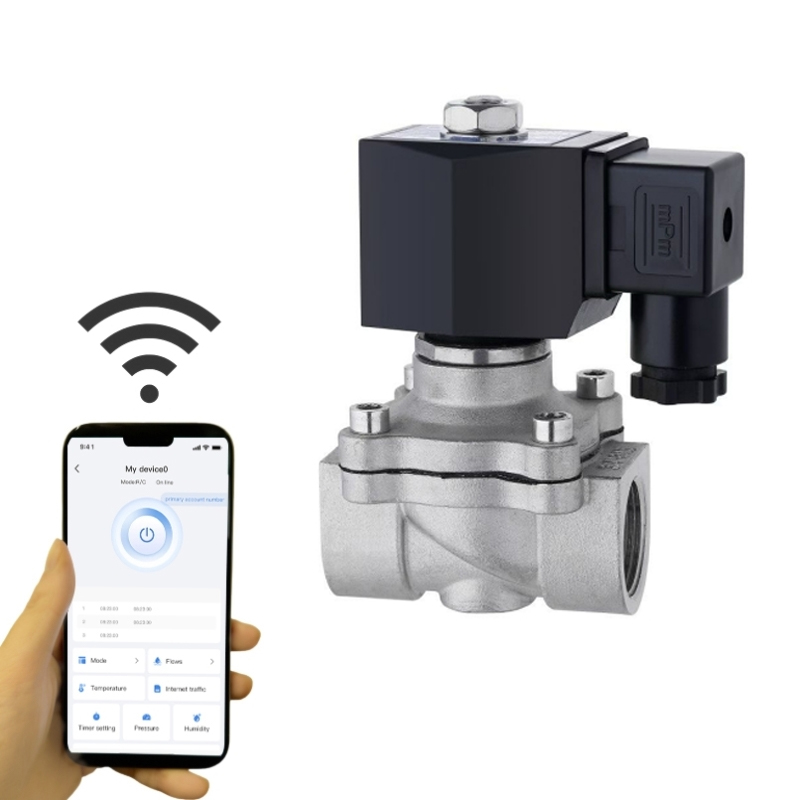 Plastic App Remote Control Solenoid ValveThis plastic-bodied valve offers app control with 0.5 W operation and direct-acting, latching, or pulse modes for lightweight smart fluid systems including irrigation and dispensers.View Product →
Most field faults show up in the first hour if commissioning checks power, signal, and pressure differential in that order. A valve that passes a bench test can still fail on site when the controller pulse is shorter than the coil needs.
Confirm coil voltage and pulse width at the valve terminals, not at the controller output.
Pair the device and store a local schedule, then disconnect the router and verify the fallback state.
Bleed air and confirm pressure differential for pilot-operated bodies at low supply pressure.
Log signal strength, open and close time, and leak status at normal and low supply pressure.
A remote valve that fails closed on signal loss is often the right choice for irrigation and water transfer. For HVAC or process lines, the safe state may be open, so state it in the specification before the controller is configured.
Keep a commissioning record with pulse width, pressure, and fallback settings. For model-specific checks, contact technical support.
Most remote-control valve complaints fall into three buckets: insufficient pulse width, low pressure differential, and a controller that has no local schedule.
Yes, if the controller stores a local schedule and a fallback state. The app is then used for setup, status, and manual override rather than for every open and close command.
Common causes are low pressure differential on a pilot-operated body, a pulse shorter than the coil needs, a discharged battery, or a seal that has swollen or stuck.
Not always. Latching designs save holding power, but they need correct pulse polarity and controller support. A continuous coil is simpler to wire and diagnose where mains power is available.
Choose by media, pressure, temperature, and environment first, then by price. Brass suits neutral water, 304 stainless covers many hotter or more aggressive duties, and plastic fits compact or chemically mild lines.



Copyright © 2025 Alahot (zhejiang) Technology Co., Ltd.
All Rights Reserved.
OEM/ODM Electric Solenoid Valves Manufacture
