


 English
 Español
-
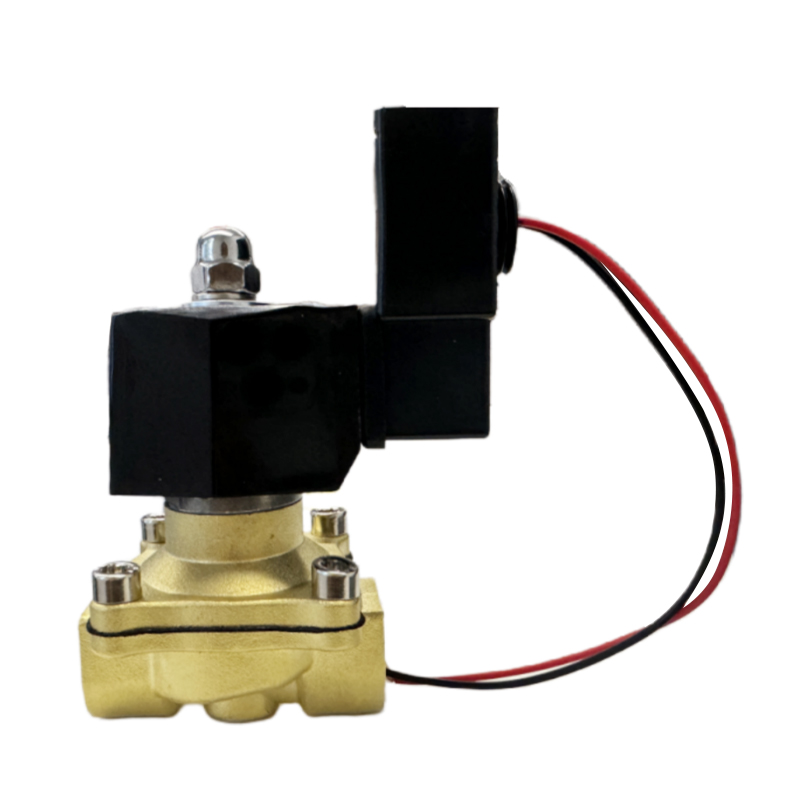 Brass App Humidity Control Solenoid Valve is designed to manage fluid flow in systems where humidity levels influence valve operation. Through app-based control and integrated humidity sensing, the va...
 -
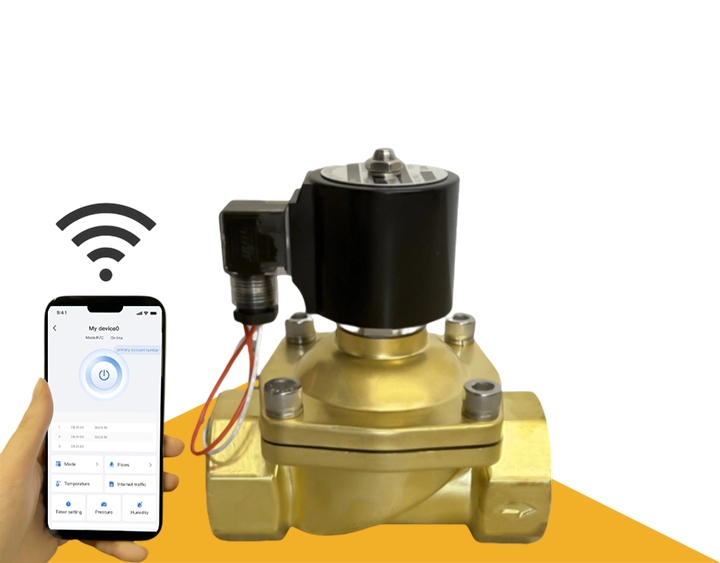
304 Stainless Steel App Humidity Control Solenoid Valve enables intelligent humidity-driven flow regulation by combining remote app connectivity with integrated sensor logic. Designed for environments...
-
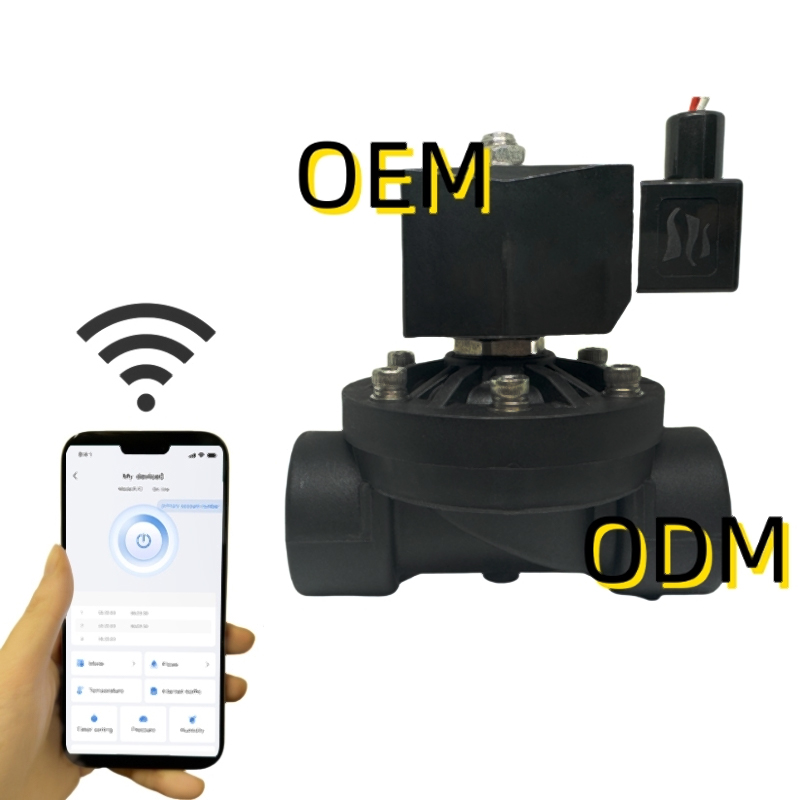 Plastic App Humidity Control Solenoid Valve integrates app-based automation and humidity sensing to enable responsive valve actuation in moisture-sensitive systems. The plastic body offers weight redu...

App Global Control Valves
Smart App Wifi Solenoid Valves Manufacturers
We integrate sensors (temperature, flow, pressure) and full communication stacks (NB-IoT, MODBUS) within the valve body.
This is not bolt-on integration — it’s true unification, making each valve capable of sensing, decision-making, and autonomous control.
Our company enables global control through diverse technologies, including remote operation worldwide, scheduled automation, temperature regulation, flow control, pressure management, humidity monitoring, and more. Custom technical solutions are available upon request.
About Alahot
Alahot (Zhejiang) Technology Co., Ltd. is a technology-driven manufacturer of solenoid valves. As Smart App Wifi Solenoid Valves Manufacturers and App Global Control Solenoid Valves Factory in China, we integrate electromagnetic control, fluidic design, communication protocols, and software engineering to build valves with intelligent sensing and precise control.
We deliver more than components—we deliver control units that can be embedded into your system, sensing, responding, and collaborating to enhance overall performance and value.
At Alahot, technology is not a buzzword. It's a verifiable ability to solve. We’ve delivered solutions that others couldn’t.
From battery-powered irrigation systems, to closed-loop HVAC controls, to ultra-quiet miniature valve assemblies for medical devices. These weren’t product tweaks—they were full-stack, co-engineered systems from hardware to software. We can deliver your first sample in two weeks—or keep optimizing its every detail for five years.
News and Information
Industry knowledge
Remote Scheduling Strategies for Smart Solenoid Valves
Smart app WiFi solenoid valves enable precise remote scheduling of fluid or gas control systems. By programming activation cycles through a mobile app, users can optimize system efficiency and reduce energy consumption. Advanced scheduling features allow staggered operation across multiple valves, preventing pressure surges and reducing wear on connected equipment.
- Implementing flow-based schedules can dynamically adjust valve opening based on real-time demand.
- Using seasonal schedules for irrigation or HVAC systems ensures optimal resource utilization.
- Integration with smart meters allows automatic adjustment based on consumption patterns.
Security and Encryption in App Global Control Valves
Global control valves accessible via apps require robust cybersecurity measures. Weak security can lead to unauthorized access, which may cause operational hazards or system inefficiencies. Encrypted communication protocols, secure authentication, and firmware update mechanisms are essential for maintaining system integrity.
- End-to-end encryption ensures that data sent between the app and valves cannot be intercepted.
- Multi-factor authentication for users prevents unauthorized app access.
- Regular OTA (Over-the-Air) firmware updates patch vulnerabilities and maintain compliance with security standards.
Optimizing Network Connectivity for Multiple Valves
When controlling multiple smart valves across large areas, network stability becomes a critical factor. WiFi mesh networks, signal repeaters, and dedicated IoT hubs can ensure seamless communication. Proper network configuration prevents delayed actuation or missed commands, which is particularly important for automated fluid management systems.
- Segmenting devices into subnetworks reduces congestion and improves response times.
- Signal strength monitoring in the app can proactively detect connectivity issues.
- QoS (Quality of Service) prioritization ensures critical valve commands are executed without delay.
Integration with Smart Home and Industrial IoT Systems
Smart solenoid valves can be integrated into larger IoT ecosystems for comprehensive monitoring and control. Data collected from valves can be used for predictive maintenance, flow optimization, and energy management. Compatibility with standard protocols like MQTT or Modbus enhances interoperability with other devices.
- Integration allows automatic shutdown during leak detection or abnormal flow conditions.
- App-based dashboards provide centralized visibility of multiple valves in real time.
- Analytics can detect patterns that optimize system performance and extend valve lifespan.
Energy-Saving Control Algorithms for App-Operated Valves
Energy consumption can be significantly reduced by applying intelligent control algorithms to app-controlled valves. Algorithms that modulate valve opening duration, adjust flow rate, or implement predictive cycles based on usage patterns improve both efficiency and equipment longevity.
| Control Method | Energy Savings | Application |
| Pulse Modulation | 15-20% | Irrigation systems, cooling loops |
| Predictive Scheduling | 10-15% | Smart home water control |
| Adaptive Flow Adjustment | 12-18% | Industrial fluid systems |
Troubleshooting Connectivity and App Issues
Despite advances in WiFi-enabled valves, connectivity and app performance issues can occur. Systematic troubleshooting ensures reliable operation and minimizes downtime.
- Checking firmware compatibility between the app and valve is essential for proper control.
- Ensuring WiFi signal strength meets minimum requirements prevents delayed or missed commands.
- Monitoring battery levels or power supply stability in remotely located valves avoids unexpected shutdowns.

Alahot is Smart App Wifi Solenoid Valves Manufacturers in China. Follow our social media postings for the latest news and exhibitions.
Discover
Contact
-
 3/F, No.72 Desheng Lane, Gongshu District, Hangzhou, Zhejiang, China
 -

-
 +86-18768178590
Newsletter
Copyright © 2025 Alahot (zhejiang) Technology Co., Ltd.
All Rights Reserved.
Custom App Global Control Solenoid Valves Factory
